

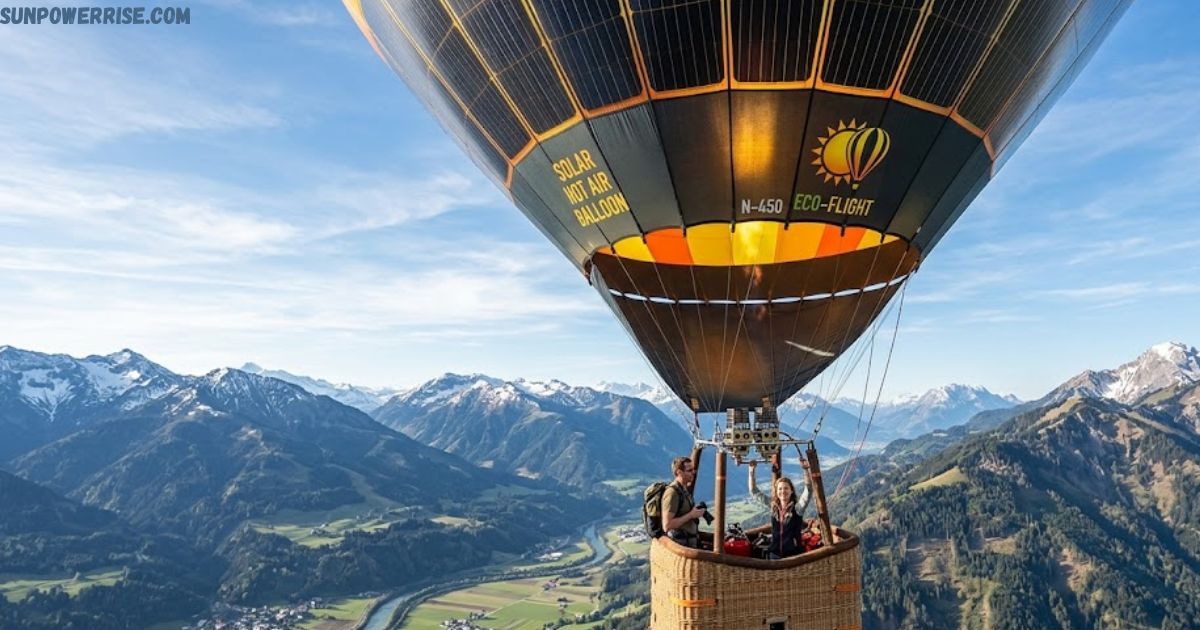
A solar hot air balloon is one of two things, and people searching for this term usually mean either one: it’s a homemade balloon built from black plastic bags that actually lifts off the ground using nothing but trapped, sun-heated air no flame, no fuel, just physics or it’s a decorative solar-powered lantern shaped like a hot air balloon, with a solar panel on top that charges all day and an LED flame flicker that glows at night. One flies. One just glows. I’ve built both, made every mistake you can make with both, and this guide walks you through each one honestly, mistakes included.
The first time I saw the lantern version hanging from a tree branch, a soft flame flicker behind a glass balloon shell it stopped me mid-step. It didn’t look like a solar light. It looked like something that had drifted into the backyard and decided to stay.
How a Solar Hot Air Balloon Actually Works
The flying version works on a dead-simple principle: hot air is less dense than cold air, so it rises. Dark plastic absorbs sunlight efficiently and heats the air trapped inside the balloon. Once that trapped air gets hot enough, the balloon as a whole weighs less than the same volume of surrounding air, and it lifts. That’s the entire mechanism no motor, no burner, just a temperature difference doing the work gravity usually wins.
The decorative lantern works completely differently and doesn’t fly at all. A small solar panel on top converts daylight into stored battery charge, and once the sun drops, that charge powers an LED strip that flickers to mimic a flame. It’s solar power and a balloon shape borrowed for ambience, not aerodynamics.
Both are genuinely satisfying projects one rewards patience and a good seal, the other rewards a good spot in the sun and I’d recommend either to a total beginner.
Materials & Design
For the flying balloon, you’ll need black plastic trash bags, scissors, and tape cellophane packing tape holds up better than Scotch tape over a long seam. Thickness matters more than people expect: thinner bags, in the 0.3–1 mil range, absorb heat faster and add less dead weight than heavier contractor-grade bags.
I’ve built mine with four bags for a smaller tetrahedron-style balloon, but if you want more lift and a longer float time, six to ten bags taped into a longer tube gives you more trapped air volume relative to the balloon’s own weight which is really the whole game here. Every inch of tape you add is weight your heated air has to lift, so keep seams thin and clean.
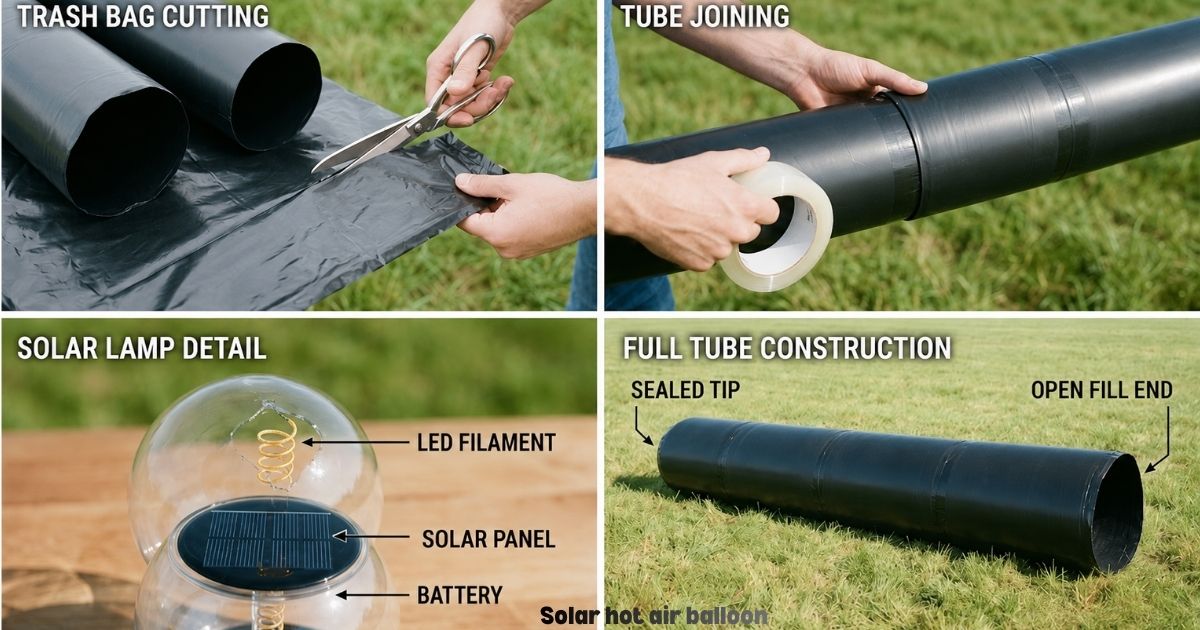
For the lantern version, you’re working with a solar panel, an on/off switch, a hanging chain, a hook, and the glass or acrylic balloon shell with an LED strip inside. Frames are usually metal, with the shell in textured glass, acrylic, or weatherproof nylon depending on the style rainbow, patriotic, plain warm white.
Most run 6–8 hours of glow on a full day’s charge. Before you hang anything, check the chain gauge. A lightweight decorative chain looks fine in a shop, but in real wind it’s the first thing to fail, and I’ve had one snap in a spring storm that I genuinely should have seen coming.
Build & Assembly
Cut the sealed bottom off most of your bags so they open into tubes, leaving one bag’s sealed end intact that becomes the closed tip. Slide one tube about an inch inside the next and tape the seam all the way around, checking for pinholes as you go, since a seal that’s 95% airtight behaves like it’s 50% airtight once the balloon’s aloft. Keep going until every section is joined and you have one long tube with a sealed tip on one end and an open mouth on the other.
The lantern assembly is far simpler the LED strip sits inside the shell, the frame holds everything together, and the panel wiring runs to the switch. No seams to worry about, just making sure the connections are snug before you hang it.
Filling, Tethering, and Launching
Once your tube balloon is built, fill it with air running with the open end forward works, or point a hair dryer into the mouth, which is faster and a lot less exhausting. Seal the open end tight once it’s full and round.
Here’s the step every tutorial on this topic should lead with and most skip: tether your balloon before you do anything else. Tie a long length of string or thread to the sealed tip before you set it in the sun.
A solar balloon that gets loose isn’t cute it’s an uncontrolled object that can drift into power lines, trees, or traffic, and once it’s out of reach it becomes litter you can’t retrieve, sometimes a hazard to birds or wildlife wherever it eventually comes down. Every time I’ve let mine fly loose “just to watch it go,” it’s been a small thrill followed by an hour of regret walking the neighborhood. Tether it, stake the string, and let it rise on a short leash instead.
If it doesn’t lift: check for pinhole leaks first hold it up and look for light escaping. Next check the time of day; balloons heat fastest within a couple hours of solar noon. Too much tape adds dead weight that can keep a smaller balloon grounded, so if you’re using four bags and it won’t budge, that’s often why. Wind is the other killer even light wind cools the surface faster than the sun can reheat it, so wait for a calm, bright day.
Placing Solar Hot Air Balloon in Sunlight
For the flying solar hot air balloon, direct midday sun with no wind gives you the fastest, most reliable lift. For the lantern, a shepherd’s hook in open sun beats a tree branch almost every time I learned this the hard way after hanging mine under a heavy tree on day one, and by day two it barely glowed because it hadn’t actually charged. Moved it to a hook in full sun, and it’s been reliable since.
Worth knowing: this isn’t a new idea. Solar-heated flight has been real since at least 1973, when the first human-carrying solar balloon flew on sun power alone. You’re building a small, backyard version of something that’s actually flown people.
Nighttime Display
A fully charged lantern puts on a genuinely good show the LED flicker reads as a real flame from a surprising distance, and a handful of them at staggered heights on hooks and branches looks like a proper installation rather than a string of lights. No wiring, no running cost, nothing but a day of sun paying it back after dark.
FAQs
Can a solar hot air balloon actually fly using only sunlight?
Yes. A well-sealed, thin-plastic balloon in direct sun and calm wind will lift on heat alone, no flame needed.
Do I need to tether it?
Always. An untethered balloon is a liability once it’s airborne and out of reach.
How long does the lantern glow at night?
Typically 6–8 hours on a full charge, less if its spot gets partial shade during the day.
Best placement for the lantern?
Full, unobstructed sun, a shepherd’s hook usually beats a shaded tree branch.
What materials make the flying version?
Thin black plastic bags (0.3–1 mil), tape, scissors, a tether string, and a calm, bright day.