

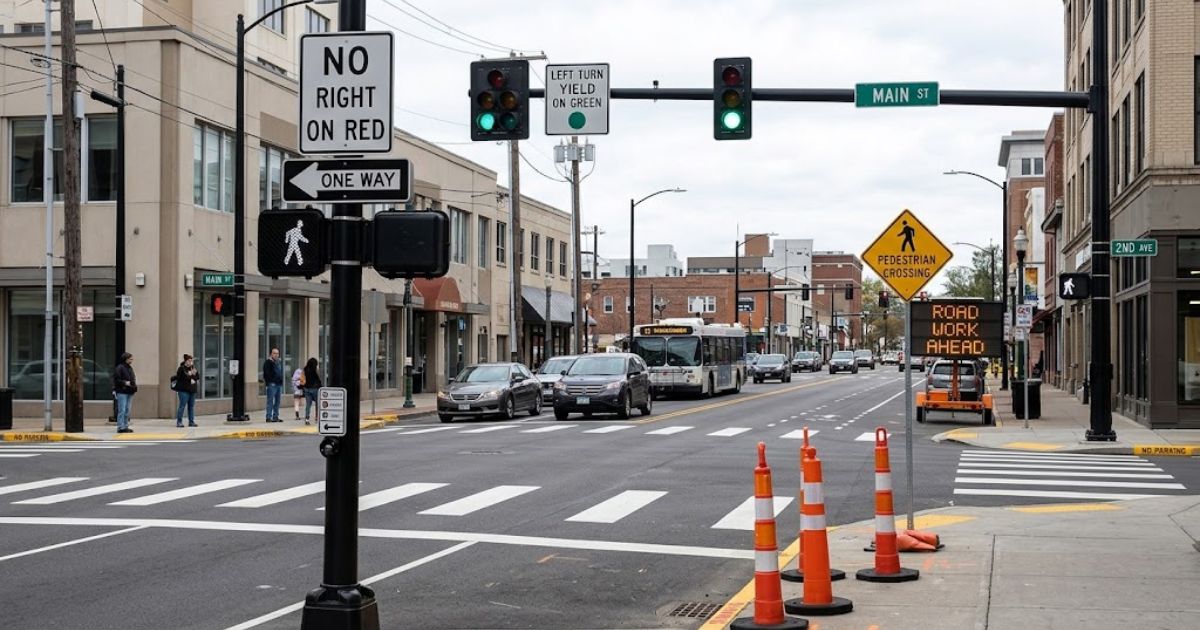
Traffic control devices are the quiet heroes I have watched for years as motorists and pedestrians move through busy places.
What Is a Traffic Control Device?
These tools include delineators, bollards, channelizers, barricades, and barriers, and they cut accidents and collisions while they support pedestrian safety. When I walk across public roads or around campuses, I notice that good road safety rules start with clear visual signs and tactile signs.
Every traffic control system mixes regulatory signs, warning signs, and guide signs. Regulatory devices such as stop signs and one-way signs tell drivers what to do, and they set speed limits. Warning signs flag steep curves, sharp turns, and pedestrian crossings, while guide signs and exit signs point drivers to gas stations, hospitals, and exits.
Control signals such as traffic signals use red lights, yellow lights, and green lights, plus lane indicators and flashing signals, to steer traffic flow at intersections.
Traffic Signs
Traffic signs talk to drivers when nobody else can, and every traffic control device on a public roadway must send a clear message. Regulatory signs such as stop signs, yield signs, no entry signs, and one way signs enforce laws, and they set the legal use of a public roadway.
A failure to obey traffic control device instructions can bring a moving violation, and intersection control exists mainly to prevent conflict and crashes. Speed limit signs and speed limit changes follow the same logic, and pedestrian crossing signs protect pedestrians.
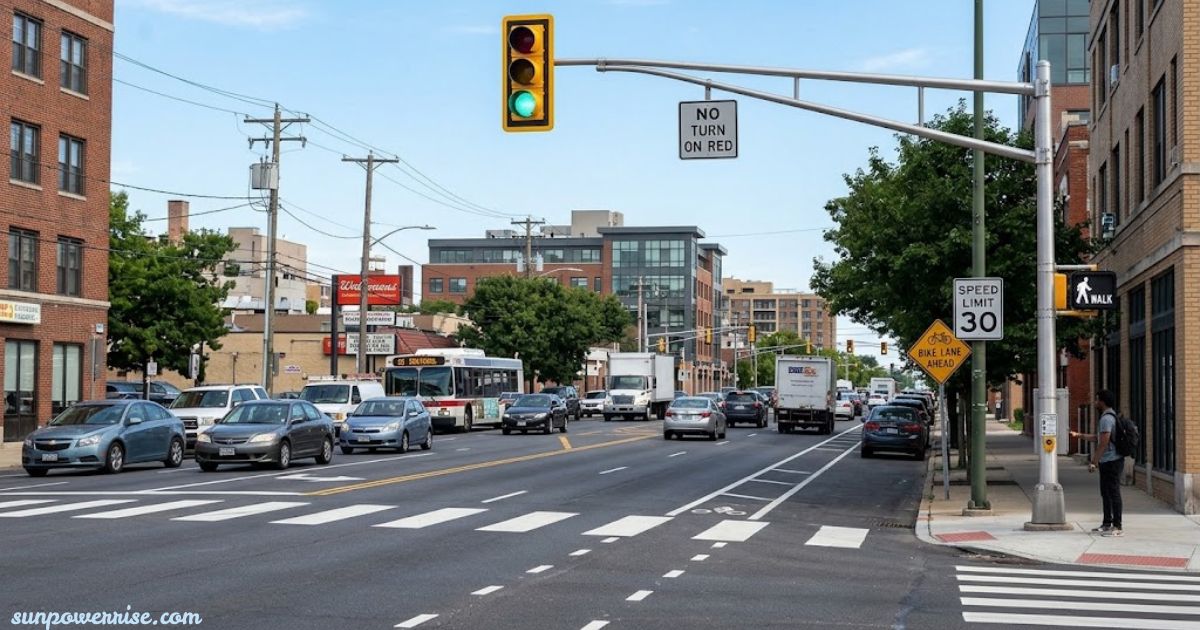
Warning signs show hazards like animal crossings, twisting paths, and sharp curves, and they urge caution before accidents happen. Guide signs and directional signs support navigation with route information, exit information, and distance to destinations. Informational signs share amenity information about gas stations, restaurants, rest areas, rest stops, and tourist attractions, and parking spaces get their own marks too.
What Is a Traffic Control Device Violation?
A traffic control device violation happens when a driver ignores a sign, signal, or road marking that the law requires them to follow. Running a red light, rolling through a stop sign, crossing a solid line, or driving the wrong way past a one-way sign are common examples. Most places treat this as a moving violation, so it can bring fines, points on a license, and higher insurance costs.
The key point is that the device must be official, visible, and placed in a legal way. A faded stop sign, a blocked signal, or a missing marking can change how a case looks, which is why careful placement and maintenance matter so much.
What Is Violation of Traffic Control Device?
Violation of traffic control device is the legal phrase many traffic tickets use on paper. It covers any act of disobeying a regulatory sign, traffic signal, or pavement marking, and it often shows up as a citation for failure to obey instructions at an intersection or in a work zone.
On public roads, police enforce it as a traffic offense. On private property such as parking lots and campuses, a property owner may not issue a ticket, yet clear signs and markings still support enforcement and help prove negligence after a crash.
Traffic Signals / Lights
Traffic signals use colored lights to keep safety high at intersections: red for stop, green for go, and yellow for caution. A good signal grabs attention, gives context, allows enough response time, and cuts wasted time. Red lights, yellow lights, and green lights work with lane indicators and lane markings to organize vehicle traffic and pedestrian traffic.
Pedestrian signals tell people when to use a designated crosswalk. Flashing lights and hanging lights can carry variable meanings, because the hue and your region change the message. Steadily burning lights and constantly burning lights often mark hazards or give warnings.
Advanced traffic signals read real-time traffic conditions and improve traffic efficiency and traffic flow. Major roadways use them most, while properties with less signage often skip them. When I drive somewhere new, I always check the color first.
Barriers & Barricadeas
Barriers and channelizers do the heavy lifting where signs alone fail, and among all traffic control devices, they offer the strongest physical protection. Highway barriers like Jersey barriers stop head-on collisions, and they separate opposite directions with firm physical separation. Gated types use cushioning impact to let a car through, while non-gated types stop it, and both limit shallow angle accidents.
Concrete barriers and guardrails protect worksites, construction workers, and temporary construction sites, and they enable traffic redirection around hazards. Barricades made of plastic or wood give a complete closure or a diversion of lanes in emergency situations. Cones, traffic delimiters, and temporary channelizers offer temporary protection in work zones, and barrels do a similar job with more weight.
Traffic Cones
Traffic cones are the most recognizable tool on the road, and they come in many shapes and colors, from brightly colored orange ones to special types for underwater jobs. Crews use them to redirect traffic, mark hazards, and show the start of work zone and the end of work zone. In every work zone I have seen, cones go down first, and they act as temporary barriers that steer drivers around obstacles and keep traffic flow steady.
Speed Humps & Speed Bumps
Speed bumps are raised areas on the road that slow down vehicles, and they appear in parking lots, near schools, and across throughways in residential complexes and commercial complexes. Speed humps give gentler control, while speed bumps deliver aggressive speed control, so pick the right one for your site. They protect pedestrians and add safety on educational campuses and business campuses.
Traffic Control Devices for Private Facilities / Parking Lots
Private traffic control leans on barriers, channelizers, and smart design, because lights bring expense and upkeep, so only large facilities use them much. Humps, bumps, and speed bumps slow cars in complexes, garages, and parking lots. I like to pair them with speed limit signs that show maximum comfortable speeds and top tolerable speeds.
Private property signage often uses striped warning signs and striped caution signs painted on support pillars and lane dividers. Stop signs matter in large lots and garages with intersections, since they prevent driver conflict and vehicle collisions. One-way signs help too, although road markings and road markers can show the direction of traffic just as well.
Traffic Control System, Importance & Site Protection
A private facility with vehicle access must protect people, assets, utilities, and buildings. Driver errors, pedal errors, and medical events cause crashes, and about 100 storefront crashes hit the US every day. Low posted speeds, smart parking orientation, and clear road marking reduce the damage, while protective barriers and storefront safety bollards add security.
As a facilities manager, you can borrow the vocabulary of public roads, because drivers already know it, and each traffic control device you add makes that message stronger. Even in states and provinces where private roads and lots don’t allow moving violations or tickets, clear signs keep negligence enforceable. This helps the environment around your site stay safe.
How to Fight Disobey Traffic Control Device
If you got a ticket for failure to obey a traffic control device, you can usually contest it. Start by reading the citation and noting the deadline to respond. Then look at the facts: was the sign or signal visible, legal, and in working order? Check for faded markings, blocked signs, broken signals, and poor placement, and take photos of the scene as soon as you can.
Next, gather evidence such as dash cam video, witness names, and maintenance records for the device. You can ask the court for a hearing, present your evidence, and question the officer about what they saw. Some places also offer traffic school or a deferred option that keeps points off your record. Rules vary by jurisdiction, so I am not a lawyer, and a traffic attorney can tell you what fits your case.
Should I Plead Guilty to Disobeyed Traffic Control Device?
A guilty plea ends the case fast, but it usually adds a conviction to your driving record, which can mean fines, points, and higher insurance rates. Before you decide, weigh the cost of the fine against the long-term impact on your record, especially if you already have other violations.
Pleading not guilty lets you contest the ticket, ask for evidence, and sometimes negotiate a reduced charge or traffic school. If the violation involved a crash, an injury, or a commercial license, talk to a traffic attorney first, because the stakes are higher. I am not a lawyer, so treat this as general information, not legal advice.
FAQs
What Is the Purpose of Traffic Control Devices?
The main purpose of traffic control devices is to keep traffic flow safe, orderly, and predictable. Signs, signals, road markings, and barriers tell drivers and pedestrians what to do, warn them of hazards, and guide them to their destination. They reduce accidents, ease traffic congestion, and prevent conflict at intersections.
What Is the Difference Between a Speed Bump and a Speed Hump?
A speed bump is a short, tall raised area that forces vehicles to slow down sharply, so it suits parking lots and private roads. A speed hump is longer and gentler, so it gives smoother speed control on residential streets and near schools.
Which Traffic Control Devices Are Used in a Work Zone?
Work zone traffic control uses traffic cones, barrels, barricades, temporary road signs, concrete barriers, and electronic message boards. Flaggers also direct vehicles around a lane closure or detour.
How Do Bollards Protect Buildings and Pedestrians?
Bollards act as a physical barrier between vehicles and people. Crash-rated bollards absorb impact from car collisions and pedal errors, so they protect storefronts, building perimeters, and pedestrian zones.
How Do Property Managers Choose the Right Traffic Control Devices?
Property managers should weigh price, installation time, visibility, adaptability, and OSHA safety regulations. Next, study the site: road conditions, vehicle speed, foot traffic, and high-risk areas such as crosswalks and entrances.