

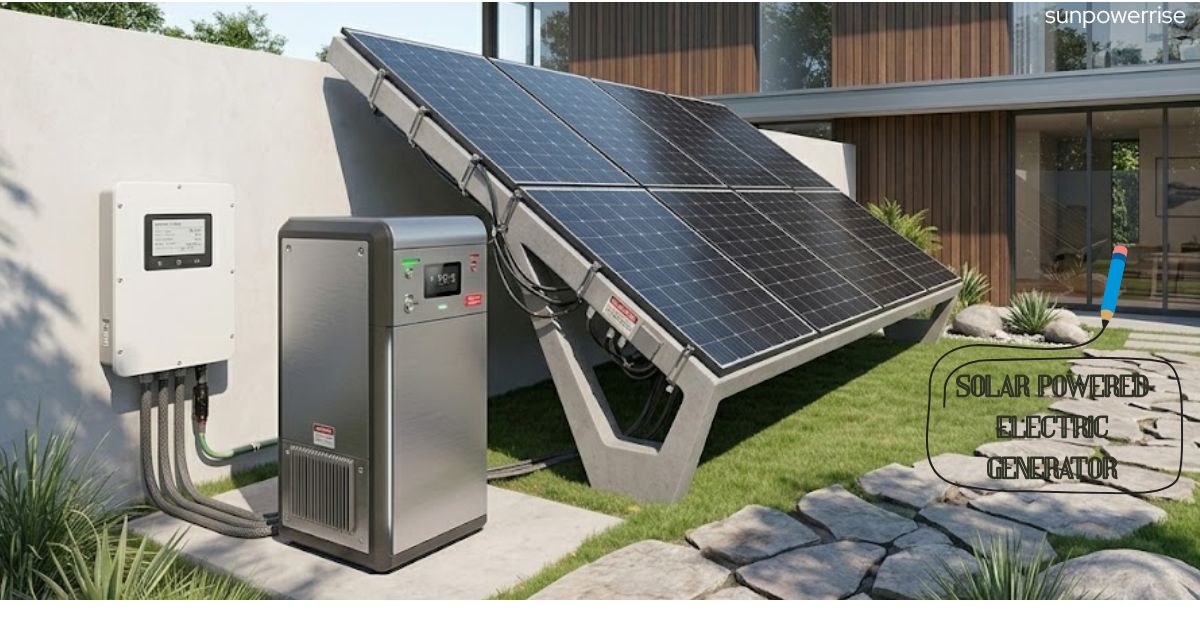
Solar powered electric generators are portable power station a battery, an inverter, and a charge controller built into one unit that stores electricity captured from sunlight and delivers it back to you as regular AC or USB power, on demand, without a drop of gasoline or a single exhaust fume.
Instead of burning fuel to spin a motor the way a traditional generator does, it simply banks the energy a solar panel collects during the day and releases it whenever you need it: at a campsite after dark, during a blackout, or anywhere off the grid.
That’s the short answer. The long answer is everything I’ve picked up actually living with these machines, from battery chemistry to the stuff nobody tells you until you’re three days into an outage.
How Solar Powered Electric Generators Charging Actually Works
There are three ways to get power into one of these units, and they’re not interchangeable in speed or convenience. Plugging into a wall outlet through the built-in DC-in port is the fastest route for most models, typically bringing a unit to full charge in roughly 2.5 to 3 hours depending on capacity.
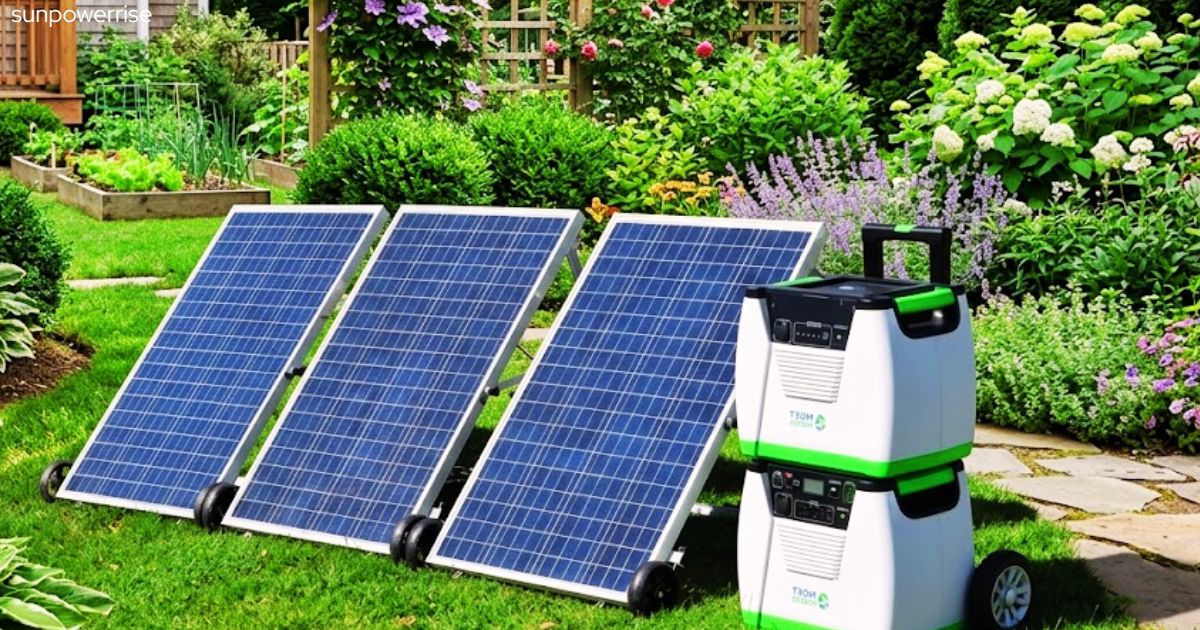
A USB-C port works almost exactly like a laptop charger, which makes topping up in the car or at a coffee shop painless. And for genuine grid independence, connecting a 100-watt or 400-watt solar panel lets you recharge entirely from sunlight though you’ll get the best results if you adjust the panel’s angle toward the sun through the day, since both weather and time of day noticeably affect charging speed.
Modern units handle inconsistent sun far better than older models did. Systems like the Anker Solix line and the EcoFlow Delta 3 are built to keep charging efficiently even when clouds roll in, instead of stalling the way early solar setups would.
Battery Chemistry and Monitoring
The real leap forward in this category has been LiFePO4 (LFP) battery chemistry paired with fast-charging technology. LFP cells are commonly rated for 3,000 to 4,000 charge cycles, which translates to roughly a decade of regular use, a dramatic upgrade over the lead-acid and early lithium-ion packs that used to dominate this space.
Charge speed has improved just as much. The EcoFlow Delta 2 Max reaches 80% in about 43 minutes, the Bluetti AC200L does the same in around 45 minutes, and the EcoFlow Delta 3 can hit a full charge in roughly 56 minutes.
Nearly every current-generation unit pairs this with app control, letting you monitor temperature, DC input, AC input, and individual port usage from your phone, plus built-in overcharge protection that automatically cuts power once the battery is full to protect its long-term lifespan.
Sizing One for Your Actual Needs
This is the step most people skip, and it’s the one that determines whether you’re happy with your purchase. Match the unit’s watt-hour (Wh) capacity to your runtime needs, and its continuous watt (W) output to the largest single device you’ll run at once with some headroom for startup surges.
|
Your main need |
Capacity to look for |
Typical use |
|
Phones, lights, small electronics |
300–600Wh |
Weekend camping, short outages |
|
Fridge, CPAP, laptops, Wi-Fi |
1,000–2,000Wh |
Multi-day backup, van life |
|
Power tools, space heater, AC unit |
2,000–3,500Wh |
Job sites, extended off-grid stays |
|
Whole-home essentials |
3,500Wh and up, expandable |
Multi-day outages, full off-grid living |
As a rough rule, a 1,000Wh class unit at partial charge can realistically keep a fridge running for roughly a day and a half to two days, power a few lights for a full day, and run a window AC unit for several hours numbers that scale up directly with both your battery’s capacity and how full it is when the power goes out.
Off-Grid Projects and Outdoor Use
If you’ve ever run a power tool off one of these during an outdoor project, you know the feeling no hunting for an extension cord, no tripping a breaker. I’ve personally run a unit through an entire afternoon of yard work, powering a circular saw while simultaneously keeping devices topped up, without it breaking a sweat.
For camping, that same capacity covers the small comforts that make the outdoors feel livable: string lights, a fan running overnight, even brewing coffee with a Keurig at the campsite.
Emergency Backup and Whole-Home Reliance
When a short outage turns into a long one, the stakes change fast, it stops being about the TV and starts being about the fridge, the heater, and staying connected to information. This is where the UPS (Uninterruptible Power Supply) function on many units matters: it protects sensitive equipment like a CPAP machine from power spikes and switches from grid to battery with effectively zero gap in power.
The off-grid and homesteading community has leaned into these machines hard. Families living in tiny homes, converted vans, and full-time on the road use larger units like the Anker SOLIX F3800 to run a microwave, a washer, a mini heater, and even air conditioning all without a utility bill.
What You’re Actually Paying For
A $600 gas generator that dies after two uses isn’t cheap, it’s just expensive later. A solar generator like the Anker SOLIX F3800, priced around $3,000, costs more upfront but replaces fuel, maintenance, and the anxiety of a machine that might not start when you need it.
The honest way to think about it: you’re paying once for ten years of quiet, low-maintenance backup instead of paying repeatedly for a system that degrades fast and needs fuel you may not have in an actual emergency.
Five Units Worth Knowing
Jackery Explorer 2000 V2 — 2,200W output, 2,000Wh+ capacity, near-silent at 30dB. Strong pick for indoor emergency use or a quiet campsite.
Bluetti AC200L — 2,400W output, expandable to 8,192Wh, 80% charge in 45 minutes. Built for serious home backup and van life, with a 30A RV connection.
EcoFlow Delta 2 Max — 2,400W base output (3,400W with X-Boost), expandable from 2kWh to 6kWh, 80% in 43 minutes. Rated for 3,000+ cycles.
Anker SOLIX C1000 — 2,112Wh capacity, full charge in under 2 hours AC or 1.8 hours solar, 3,000-cycle battery.
EcoFlow Delta 3 — Full recharge in about 56 minutes, expandable to 5kWh, 4,000-cycle battery rating, powers up to 13 devices at once.
FAQs of Solar Powered Electric Generators
What is a solar powered electric generator?
A solar powered electric generator is a high-capacity battery system that stores energy from solar panels and delivers clean power to your devices and appliances without any fumes or noise.
How long do solar powered electric generators take to charge?
Depending on the model and charging method, most solar powered electric generators charge fully in 1.8 to 3 hours via solar panels or wall outlet.
Can solar powered electric generators power a whole house?
A high-capacity solar powered electric generator can run critical home appliances like a refrigerator, heater, lights, and Wi-Fi during a power outage for several days.
How long can a solar-powered electric generator run a refrigerator?
A large capacity solar powered electric generator can keep a refrigerator running for up to 3.5 days on a single full charge.
Are solar-powered electric generators safe to use indoors?
Yes, unlike gas generators, solar powered electric generators produce zero fumes and operates near silently, making it completely safe for indoor use.