

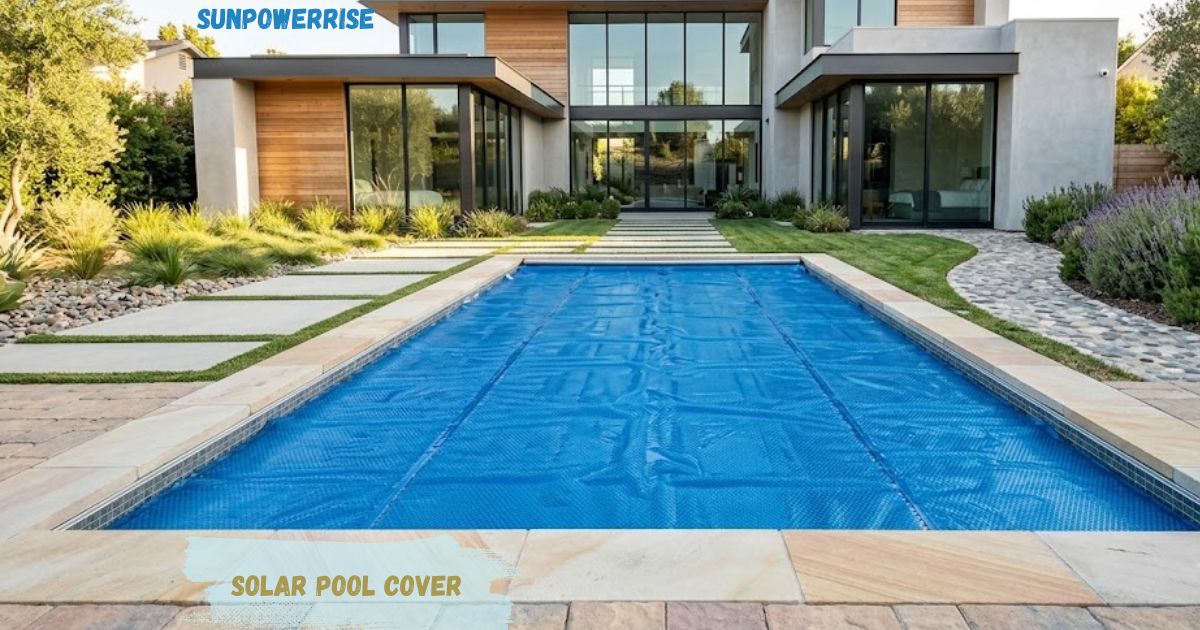
A solar pool cover is a floating sheet of UV-stabilized polyethylene, filled with tiny air bubbles, that sits on the water’s surface. It does three jobs at once. It lets sunlight through to warm the water, it holds that warmth overnight, and it slows evaporation.
Owners commonly see a rise of 10 to 15°F, and most covers cost between $75 and $300. It is a heating and saving tool, not a safety cover, and that distinction matters later in this guide.
A Quick Baseline Test of Solar Pool Cover
Before I committed, I ran a simple test. It was 72°F outside and my water sat at 68°F. Within minutes of laying the sheet down, the wrinkles smoothed out under the sun. After I trimmed it to fit, it lay flat across the surface. Note your starting numbers the same way, so you can measure the real difference instead of guessing.
Less Evaporation, Less Water Loss
An uncovered pool loses roughly a quarter inch of water a day, and more in hot, dry, windy climates. A cover creates a barrier that stops most of that. On my own pool, the difference has been tens of thousands of gallons saved each year. That matters even more if your area has water restrictions or high water costs.
Lower Chemical Use
Less evaporation means you replace less water, and the cover also shields chlorine from UV. After I began covering the pool consistently, I used about 30 to 60 percent fewer chemicals and kept the water balanced and sanitised all season. I learned that the hard way, after years of overdosing out of habit.
Warming the Water
The bubbles catch sunlight during the day and pass the heat down into the water. At night they act as insulation, so the warmth stays put.
In my case, the pool started with a four-degree gap, 68°F water on a 72°F day. After a few weeks under the cover, the water had gained 10 to 15°F, and by morning it had lost far less overnight. If you already run a gas heater or heat pump, the cover cuts its run time, because the heater is fighting less heat loss.
Choosing Color and Thickness
Blue covers absorb more of the sun’s energy and hold heat well. Clear covers let more light pass through, so they can heat water faster but keep it less effectively overnight. Blue is the safer all-round choice.
Thickness is a trade-off:
8 mil: enough for warm climates and small above-ground pools.
12 mil: a solid middle ground for most owners.
16 mil and up: the strongest heat boost and the best durability.
Manufacturers claim up to 8 years of life. Owners on forums often report 2 to 4, and that gap comes down mostly to how much sun, chemicals, and rough handling the cover sees.
Placing the Solar Pool Cover
Lay it bubble side down so it floats flat against the water. The bubbles transfer heat better there, and they last longer submerged than baking in open air.
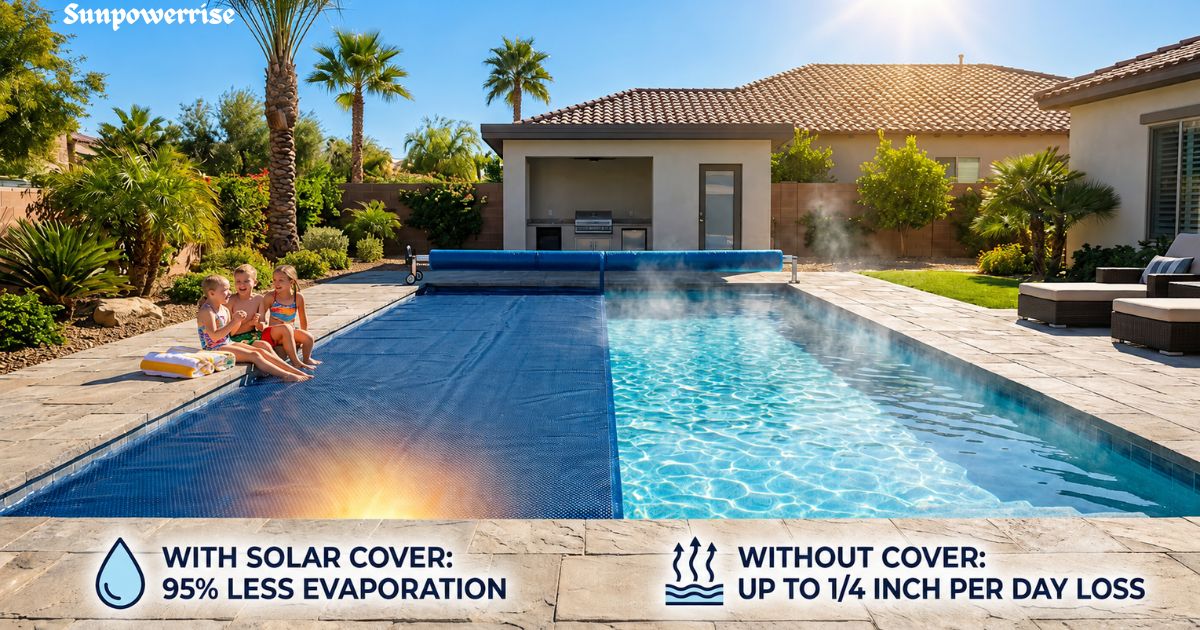
Shade matters too. A pool that gets only a few hours of direct sun will see far less benefit from any cover.
Cutting and Trimming
Buy one slightly larger than your pool and trim it down. A cover that’s too small leaves water exposed and loses much of its value. Here’s what worked for me:
Start along the factory edge and trace your pool’s shape with a marker. Fold the sheet to find the crease, and mark it where it meets the wall. Cut relief slits at corners so it lies flat.
Snap a chalk line if the marks get hard to see, especially near steps and coping. Expect to trim it again after a few weeks, because covers relax and flatten with use. If you have a filter basket or a skimmer in the way, fold that section over so the cover still sits inside the pool edges.
Installing, Removing, and Storing
Some pool solar covers include small tie points where you can loop a cord to pull the sheet across the water. For anything larger than a small pool, a reel makes life much easier. It rolls the cover up neatly, saves your back, and prevents the folding damage that shortens its life. Keep the reel or folded cover in shade or under a tarp. Sunlight on a stored cover can overheat it, cause delamination, and cause damage that warranties usually don’t cover.
Cleaning and Debris
The cover keeps leaves and dust out of the water, which shortens cleaning time and stretches the gap between filter cleanings. The debris collects on top instead, so brush it toward the skimmer or scoop it off before it washes into the pool. Once in a while, prop the cover up and rinse it with a hose.
Water Chemistry Rules
Chemistry is the fastest way to ruin a cover. Low pH or high sanitizer levels can make it brittle and cause bubbles to burst, and most warranties (typically 3 to 7 years) exclude that damage.
After shocking, leave the cover off until chlorine levels settle, roughly 8 to 10 hours.
After adding other strong chemicals, give the pool a few hours of circulation first.
Solar covers are safe for both chlorine and saltwater pools, as long as the water stays balanced.
When to Use It
The cover pays off most in early spring and fall, when it stretches your swim season at both ends. In the hottest climates, summer water can get uncomfortably warm under a cover. In that case, take it off during the day, or leave it on only at night. Some regions with water restrictions encourage year-round use purely for evaporation savings.
The Safety Limit
A solar cover for pool is far too light to support a child, a pet, or an adult. Anyone who falls onto it can become trapped underneath, which is worse than an open pool because the cover hides the danger. Remove it fully whenever anyone might be near the water. If you need real protection, look at a proper safety cover or an automatic cover.
Liquid Solar Covers
Liquid solar covers for above ground pool are alcohol-based additives that form a thin film on the surface. They slow evaporation and are handy when a solid cover isn’t practical. But they add no heat from the sun, they save less than a full cover, and they need regular reapplication. Wind also disrupts them. Treat them as a backup, not a replacement.
Is It Worth It?
For most owners, yes. A solar pool cover typically pays for itself through savings on water, chemicals, and heating, and it makes the pool warmer and cleaner. Pick blue in a medium thickness, size it generously, keep it out of the sun when it’s off the pool, and respect the chemistry rules. Do that, and it’s one of the cheapest upgrades a pool can get.
FAQs
Are solar pool covers worth it for pools?
Yes, a solar cover is absolutely worth it. It helps you save money, reduce chemicals, and enjoy a warm pool all season, so honestly, it’s one of the best small investments I’ve made as a pool owner.
How many days can you leave a solar cover on a pool?
You can leave a solar cover on for several days at a time, but it’s smart to remove it now and then for sunlight, fresh air, and a bit of cleaning time so it stays in good shape.
How much warmer is a pool with a solar pool cover?
In my own experience, a solar cover can raise water temperature by 10 to 15° Fahrenheit, sometimes closing the temperature differential completely between the air and the water below.
Do you run the pool pump with the solar cover on?
Yes, you should still run the pump with the solar cover on, since proper water circulation keeps the chemistry levels balanced and prevents issues like a weak cover over time.
Can I shock a pool with a solar pool cover on?
It’s best to remove the solar cover before you add chlorine shock, since chemicals left sitting under the cover can cause bubbles falling apart and leave you with a brittle cover.