

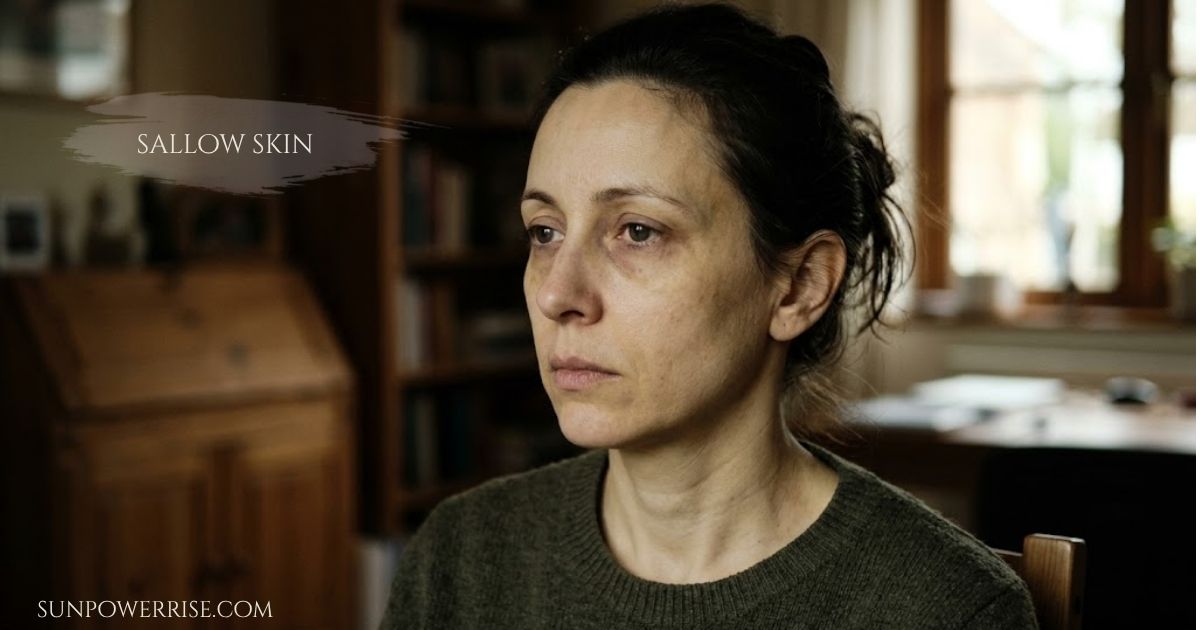
Catching your reflection in the mirror and noticing a sallow skin complexion can feel unsettling, especially when your face looks more tired than usual. Instead of a vibrant glow, you might see grey or brown patches replacing your once natural complexion, leaving your skin tone looking lifeless and dull.
Sometimes dull skin shows up after a busy week, or following a few bad nights of sleep, and it’s tempting to blame fatigue alone. But sallow skin is often a deeper sign that something inside your body is out of balance, whether that’s linked to certain health conditions or a simple vitamin deficiency.
This article works as a simple guide to help you understand sallow skin, its underlying causes, and how you can restore your skin’s natural radiance.
What Sallow Skin Is and What It Looks Like
Sallow skin is more than an occasional bad skin day; it’s often described as a persistent condition that changes how your skin colour looks over time, making it appear sallow in a way that’s hard to hide with concealer alone.
Your skin is made of two components: the dermis, known as the innermost layer, which gives skin its strength and elasticity, and the epidermis, the top layer, which keeps renewing itself as old skin cells shed and new ones take their place. This shedding and rebuilding cycle usually takes about a month, and once you start proper care, you may start to notice improvements within 1 to 2 months.
A sallow face can look drained, almost as though life and brightness have quietly slipped away the kind of shift where colour simply fades away and leaves a dull appearance in place of a healthy glow.

Depending on your skin tone, this can show up as a yellowish or greyish tint, sometimes paired with an uneven skin tone or a skin texture that turns rougher and patchier. It isn’t only an ageing process issue either, since this can appear in your twenties or thirties just as easily as when you’re older.
This change is rarely sudden; instead, it’s usually a slow process, so subtle that you might not notice until your skin looks strangely flat-looking or grey in the mirror. With the right treatment, you can bring back your natural brightness and your natural complexion, essentially bringing your skin back to life.
Causes of Sallow Skin
Several everyday factors can chip away at your skin’s radiance, and most of them are more common than people think.
A poor diet loaded with processed food, ongoing poor sleep quality, heavy pollution, and long-term sun damage all rank among the biggest triggers. Once you know which of these apply to you, fixing sallow skin becomes a much clearer process, as the sections below explain in more detail.
The Impact of Anaemia
Anaemia happens when your red blood cells cannot carry enough oxygen through your body, which often leaves you feeling tired and lethargic, with skin that looks pale or slightly yellow.
Acute anaemia usually clears up once you add more iron and vitamin B12 to your diet, though a doctor may still suggest supplements if food alone doesn’t supply enough nutrients.
That’s why a full checkup matters whenever tiredness and dull skin show up together without an obvious cause. Once the real trigger is found and treated, most people see their glow return fairly quickly.
Essential Nutrients for Skin Health
A vitamin deficiency is another common trigger, since most people connect healthy eating with weight loss goals and forget that nutrient-rich foods also keep skin cells working properly. Vitamin C, for example, helps shield your skin against harsh environmental elements, and several other deficiencies can quietly chip away at your glow.
Vitamin C also shows up richly in citrus fruits and broccoli, while vitamin E comes from nuts and vegetable oils, and vitamin K hides in berries and dark leafy greens.
Building meals around a wide, largely plant-based spread usually covers most gaps naturally, without needing anything extra. Still, if a dull complexion lingers for weeks, asking about vitamin supplements is a reasonable next step. I did this myself once, and it made a noticeable difference within a month.
The Role of Dehydration
Dehydration is a sneaky cause, since experts still debate whether drinking extra water truly improves skin hydration, compared with simply staying hydrated and using moisturizers on the surface. Even so, doctors generally suggest aiming for about eight glasses of water a day as a sensible baseline. Not every drink counts the same way, though some beverages actually work against you.
Effects of Coffee and Alcohol
Caffeinated beverages such as coffee can quietly dehydrate your skin, and alcohol is often the worst offender of all, leaving skin skin-drying and sallow the morning after. Cutting back on these, even slightly, tends to show up in your complexion faster than people expect. Small swaps, like water instead of a second coffee, add up over a few weeks.
Stress and Skin Damage
Stress doesn’t stay contained inside your head it raises blood pressure, contributes to weight gain, and leaves you with dry skin, since your skin is technically your largest organ and often reacts first. Chronic stress is the most damaging form, largely because of the hormone cortisol, which breaks down collagen over time. Good stress management habits matter for your skin just as much as they matter for your overall health.
Simple steps like meditating for just 5 minutes a day, exercising regularly, staying close to friends and family, and delegating tasks when you’re overwhelmed can all ease the pressure. None of these requires a complete life overhaul. They just need consistency.
One sleepless night rarely does lasting damage, but ongoing sleep deprivation slowly drains your skin’s ability to repair itself. Aiming for 7 to 9 hours of sleep each night gives your body the window it needs to recover. Building a steady bedtime routine helps more than most people realise.
Prevention: Habits That Bring Back Your Glow
Preventing sallow skin starts with a genuinely healthy lifestyle and consistent skin care, rather than chasing quick fixes. Drinking enough water, eating a balanced diet full of fruits and vegetables, and getting proper rest all lay the groundwork for a brighter complexion.
Daily sunscreen, along with limiting sun exposure and staying away from pollutants and smoke, protects the progress you’re making.
Essential Cleansing Habits
Regular cleansing and moisturizing go a long way toward keeping your natural glow intact and preventing a sallow skin color from settling in. On the other hand, poor skin care habits cause real long-term effects, and repeated sun exposure is one of the worst offenders over the years. Building simple daily skin care habits starting with proper face washing removes dirt, oil, bacteria, leftover makeup, and pollution from your skin before it can do damage.
Choosing the Right Products
A gel-based wash tends to be gentle enough for regular use without irritating your skin. Follow it with a moisturizer that acts as a barrier, keeping skin hydrated, and choose the right moisturizer skin type for you creams for dry skin, and lighter lotions for combination skin or oily skin.
Cumulative Impact of Daily Choices
It’s rarely the big things that dull your complexion it’s the small stuff, like scrolling on your phone late at night, that leads to lost sleep and blocks your skin’s ability to repair itself overnight. A half-hearted skincare routine, with a rushed face wash here and a skipped moisturizer there, lacks the consistency your skin needs for real support.
Diets heavy in processed food but light on skin-building nutrients rob your body of essentials like vitamin C for collagen and iron for oxygen delivery, and this damage doesn’t happen overnight it simply builds up.
How Soon Will You See Results?
Real skin turnaround doesn’t happen overnight; your body needs time to actually rebuild. A full skin cell turnover cycle takes roughly 28 days, and that’s just for the surface layers deeper changes, like restoring healthy blood flow, rebuilding collagen, and smoothing texture, usually take closer to two or three months.
It’s easy to get impatient and expect glowing skin or magazine-ready skin within a couple of weeks, but real natural radiance comes from giving your body the support it needs to heal properly. Better food, more water, the right minerals, daily SPF, and even that extra hour of sleep you finally start getting all build momentum beneath the surface, long before it becomes visible.
Think of this less as chasing an artificial glow and more as returning to your natural vibrancy your skin simply remembering what healthy skin feels like and slowly learning to show it again. Patience really does pay off here. Give it the full stretch of time, and the results tend to speak for themselves.
FAQs
What does it mean to be sallow skinned?
Having sallow skin means your complexion looks dull, yellowish, or grayish instead of healthy and radiant.
What vitamin deficiency causes sallow skin?
A deficiency in Vitamin B12, iron, or Vitamin D can lead to dull, sallow-looking skin.
Why is my skin sallow?
Your skin may look sallow due to poor diet, dehydration, lack of sleep, smoking, or an underlying health condition.
Can sallow skin be reversed?
Yes, sallow skin can often be reversed with a balanced diet, hydration, quality sleep, and a consistent skincare routine.
What is the prettiest skin tone?
There’s no single “prettiest” skin tone. Every skin tone is beautiful, and healthy, glowing skin is what truly stands out.