


Robotics is no longer just a big-factory story, and robotics in Gilbert proves it. Local owners now ask how a robot could handle dull jobs while their people tackle bigger ones. This guide answers those questions in plain words, with numbers you can check.
What are robots, and why should Gilbert owners care?
Robots are machines that do physical work with little human help, and robotics adoption is climbing fast. Gilbert is a town of about 268,000 people in Maricopa County, so local firms compete with larger Phoenix metro manufacturers. A good robotics engineering company helps them close that gap.
I tell owners to start with a problem, not a machine. Arizona robotics keeps growing, and Gilbert manufacturing shops often ask about machine tending and packaging first. Well-chosen automation solutions fix one clear bottleneck before anything else.
What does a robot system include?
Most robotic systems pair robotic arms with a robot controller and a few sensors. Smarter setups add artificial intelligence (AI) and machine learning, so the machine improves with practice. One robotic cell can fit in a corner of your shop, so space rarely blocks you.
Sensor technology tells the robot where each part sits, and real-time data analysis lets it adjust on the spot. These intelligent robots often link through the Internet of Things (IoT), so you can check output from your phone. Basic robot programming now takes days, not months.
How are cobots different from older industrial robots?
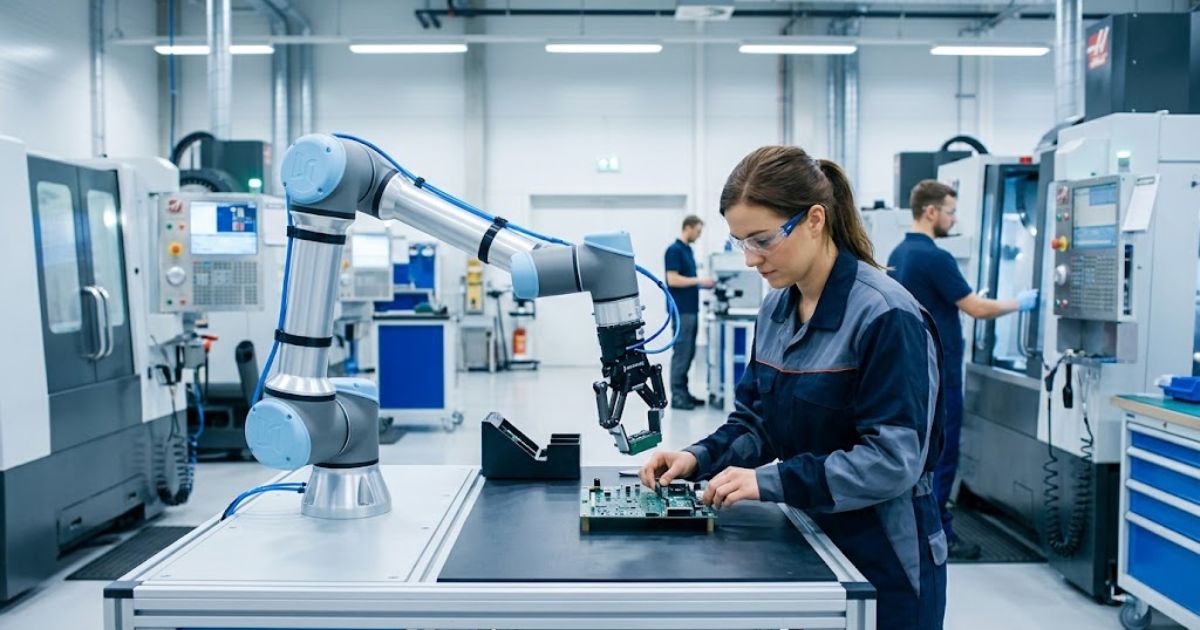
Collaborative robots (cobots) work beside people without a safety cage, while older machines need fenced-off space. Cobots move slower, but they fit tight spots and cost much less to set up. That makes human-robot collaboration realistic for a small shop today.
Most cobots offer user-friendly design, so an operator can teach them by guiding the arm by hand. A touchscreen interface or human-machine interface (HMI) shows every step. Plug-and-play automation, pre-programmed robots, and electric grippers cut setup time, and ease of use beats raw speed.
How do robots make a business more efficient?
Robots boost operational efficiency because they repeat each move the same way every time. That consistency brings increased productivity and higher throughput, even late in a long shift. You get improved efficiency without hiring extra hands or stretching your schedule.
Robots excel at repetitive tasks and labor-intensive tasks that wear people down. Better workflow optimization follows once you free those hands. Strong process optimization and streamlined workflows show up quickly.
Can a robot really work all day and night?
Yes, a robot can work day and night because it needs no breaks, no sleep, and no shift changes. 24/7 operations work when you stock parts and schedule regular checks. Some shops run round-the-clock production with unattended night shifts and a morning quality check.
That means increased output without overtime pay. It also gives you faster production when rush orders land, plus reduced downtime between shifts. Robots still need minimal downtime for service, so plan maintenance windows.
How accurate are robots compared with people?
Robots hold tight tolerances over a full shift, and that steadiness matters a lot for repeat orders. Precision and accuracy stay the same from the first part to the thousandth. You get consistent quality and minimized human error as a result.
Cameras and AI-driven quality control flag a bad weld or loose part instantly. Standard quality control checks then take less effort. Better speed and productivity follow, and you see fewer defects and less rework at the end of the line.
How much money can robots save a Gilbert business?
Savings come from several places at once, starting with cost savings on labor, scrap, and energy bills. Most owners notice operational cost reduction in payroll and reduced material waste first. Long-term savings keep growing as the machine pays for itself over the years.
Robots take over dull jobs, which means lower labor costs and reduced training costs for repeat work. You also spend less on overtime, so reduced wages and benefits show up in your monthly report. Reduced manual labor helps every day, and reduced reliance on manual labor protects you during hiring crunches.
How fast does a robot pay for itself?
Return on investment (ROI) compares what a robot costs with what it saves. Gilco, a California machine shop, cut a high-volume run from two spindles and two weeks to one spindle and one week. That result shows how cost-effective automation can pay back quickly.
Build your own estimate with resource optimization in mind by counting labor hours, scrap, and rework. Then add energy efficiency gains, which bring lower utility bills and sustainable production. Increased profitability shows up once the loan ends.
Can small shops afford a robot?
Prices vary widely, and high implementation costs scare many owners away from even asking. Still, affordable automation exists for tight budgets, and automation financing spreads the bill over many months. Always ask for an itemized quote before you sign anything, and compare at least two.
Small businesses do best when they start with one cobot instead of a full line. Robotics ROI for small businesses often looks best on a single task. You can skip any infrastructure overhaul if the cell fits your floor.
Which Gilbert industries gain the most from robots?
Manufacturing, logistics, and healthcare gain the most because those fields repeat tasks all day. Results there are easy to measure, which helps you justify the spend to your partners or bank. Local firms in these areas often see the clearest gains.
Think robotic manufacturing solutions, automated assembly lines, welding, and CNC machining. A shop with CNC robotics can run spindles unattended, and assembly work stacks extra gains on top. Choose one process first.
How do robots help warehouses and deliveries?
Robots speed up warehouses by picking, sorting, and moving boxes without waiting for breaks or paperwork. Warehouse automation shortens order fulfillment times for every customer, even during busy seasons. It also keeps inventory management accurate from receiving to shipping, which cuts costly counting mistakes.
Supply chain management runs smoother when robotic pickers and autonomous vehicles cover warehousing tasks. E-commerce sellers in Gilbert can promise faster shipping, and last-mile delivery bots may follow. Start small and measure.
What can robots do in hospitals, stores, and farms?
Robots support robotic-assisted surgery, run lab automation, and sort pills as robotic pharmacy assistants in busy hospitals. In pharmaceuticals, they handle drug manufacturing with clean, repeatable steps that make audits easier. Surgeons still guide every move, and nurses still check every prescription.
Retail stores now test automated checkout systems. Agriculture uses autonomous tractors, robotic harvesters, and precision planting to cover big fields with fewer workers. Farms near Gilbert may follow the same path.
Will robots take jobs from my workers?
Robots change jobs more than they erase them, although job displacement is a real worry for many workers. New job opportunities appear in oversight, repairs, and maintenance roles that did not exist before. Plan early, and your team grows alongside the machines instead of fearing them.
Staff who once loaded parts now handle higher-level work, programming, and system management. Owners who invest in employee upskilling keep their best people and see employee productivity gains. Give each person strategic roles to own.
Can robots help when I can’t hire enough people?
Robots ease labor shortages, though they never replace a good team of motivated people. They cover jobs nobody wants to apply for, which keeps orders moving on time. Your workforce then focuses on tasks that need judgment, care, and a friendly voice.
Human workers still make the calls, and skilled professionals keep everything running. Offer employee training early so nobody feels left behind. That respect keeps morale high.
Do robots make the workplace safer?
Yes, robots improve workplace safety by taking over heavy lifting and other dangerous jobs on the floor. They handle hazardous tasks like hot parts, sharp edges, and toxic fumes. Staff then feel reduced physical strain at the end of each shift.
An ergonomic work environment lowers injury risk over the years. You still must follow safety rules and train every operator. Safe cells always start with a proper risk review.
What problems should I expect when adding robots?
Expect implementation challenges like cost, floor space, staff worries, and learning curves. Technical complexity can slow the first month, and integration with existing systems often takes the most time of all. Ask your vendor about both before you buy, and get answers in writing.
Careful planning and responsible implementation prevent most surprises. Watch security risks and data privacy, especially when machines connect online. Raise ethical decision-making questions early with your team.
How do I keep a robot running well after installation?
Treat a robot like a delivery van that needs regular service, fresh fluids, and a driver who cares. Preventive maintenance and predictive maintenance catch problems before they stop production for days. Good post-installation support makes this far easier, so ask about it before you sign.
Ask for ongoing support, troubleshooting help, and system updates in writing. Continuous updates keep software safe, and extended equipment lifespan and reduced repair costs follow. A written schedule beats good intentions.
How do I choose the right partner in Gilbert?
Pick a local automation partner with real industry expertise and proof of past work in shops like yours. Robotics consulting from a firm that offers robotics integration services helps you avoid costly mistakes. Visit their shop floor if possible, and meet the engineers.
Check their project portfolio, ask about customization capabilities, and review automation design and automation implementation experience. Read customer testimonials and success stories, and request an automation case study from your industry. Skip anyone who offers only one package.
How do robots help Gilbert companies compete?
Robots build a competitive advantage by speeding delivery and holding prices steady for loyal customers. Early adopters find staying competitive easier and win more bids from careful buyers. Many forward-thinking businesses treat robots as a strategic investment, not an expense.
Future-proof operations help you handle market demand swings in an evolving market. The global robotics market may pass $100 billion by 2030, according to industry reports, and growing demand for automation keeps pushing that forecast. Business growth follows when you can scale.
FAQs
Do robots help small and big companies equally?
Both gain, but in different ways, and neither needs a huge budget to begin. Startups and small and medium-sized businesses (SMBs) gain speed and flexibility, while large enterprises gain scale and steady output. Each group boosts customer satisfaction by shipping orders faster.
Scalability matters as orders grow, and scalable production keeps quality high. A one-stop-shop approach wins repeat buyers, and faster turnaround time helps in high-volume production. Reduced production time shows up on every invoice.
What comes next for robots in Gilbert?
Expect smarter, cheaper machines over the next decade, and expect them sooner than most owners think. The future of robotics includes emerging technologies and AI-driven decision-making that learn from your own shop data. Robotics trends point to autonomous robots working alongside people on the same floor.
Smart cities may use security robots and service robots, while smart homes gain home robots and robotic cleaning. Personal robots will follow. Business transformation and digital transformation push owners to modernize.
Can robots help the environment?
Yes, minimized waste and the circular economy go hand in hand, since robots sort and reuse materials with great care. CNC plasma cutters also cut metal with less scrap, which saves money on every sheet. Cleaner shops cost less to run.
Smart manufacturing ties these gains together through data. AI-powered robotic systems spot waste early, and production line optimization follows. Industrial automation at this level suits any shop.
What is the first step toward Gilbert business automation?
Start with Gilbert business automation goals written on one page, in plain words. List your slowest task, then ask which customized automation solutions fit it. Robotics for local businesses works best when you pick one clear target and stick with it.
Ask vendors about seamless integration with your current tools, and compare business process automation for office tasks too. Build future-ready systems one step at a time, and treat automation as a habit, not a one-time purchase. My rule of thumb: pick one task, measure it for 90 days, then decide.