

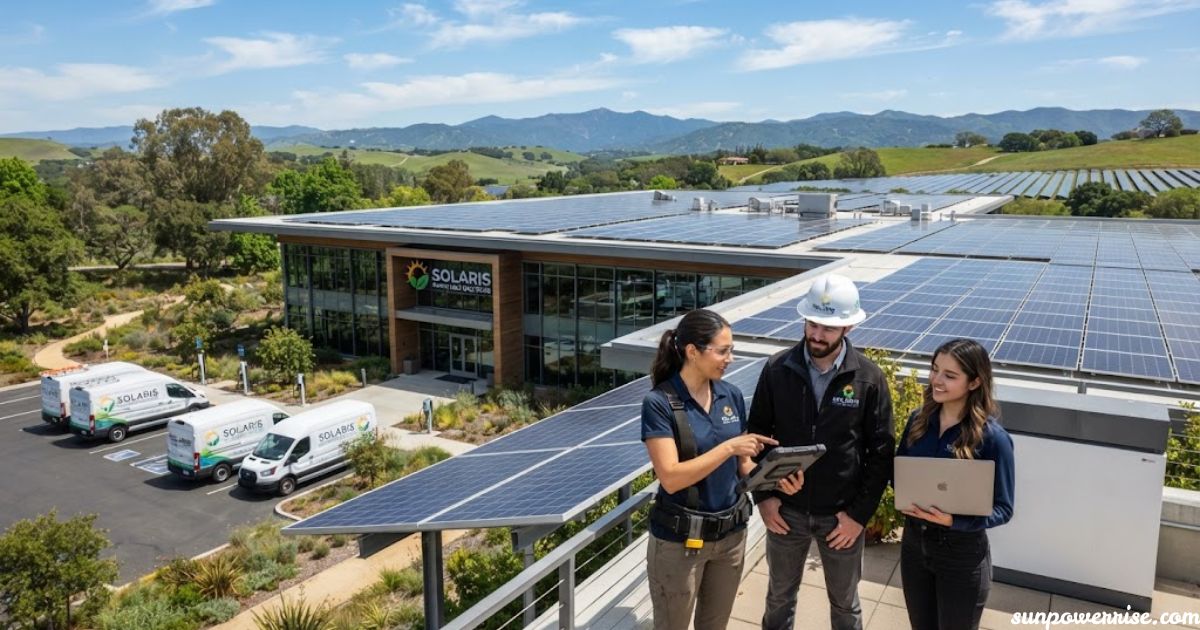
Solar leasing companies have changed how everyday homeowners go solar, and understanding how they work makes the whole decision a lot less confusing. Think of leasing solar panels the same way you would think about leasing a car: you get to drive it every day, but the dealer still holds the paperwork.
That is the heart of a solar lease, a solar company works as a third-party developer who installs and maintains the number of solar panels your roof can hold, and instead of paying cash or taking out a loan, you sign an agreement and pay a fixed monthly payment to use the solar energy it makes.
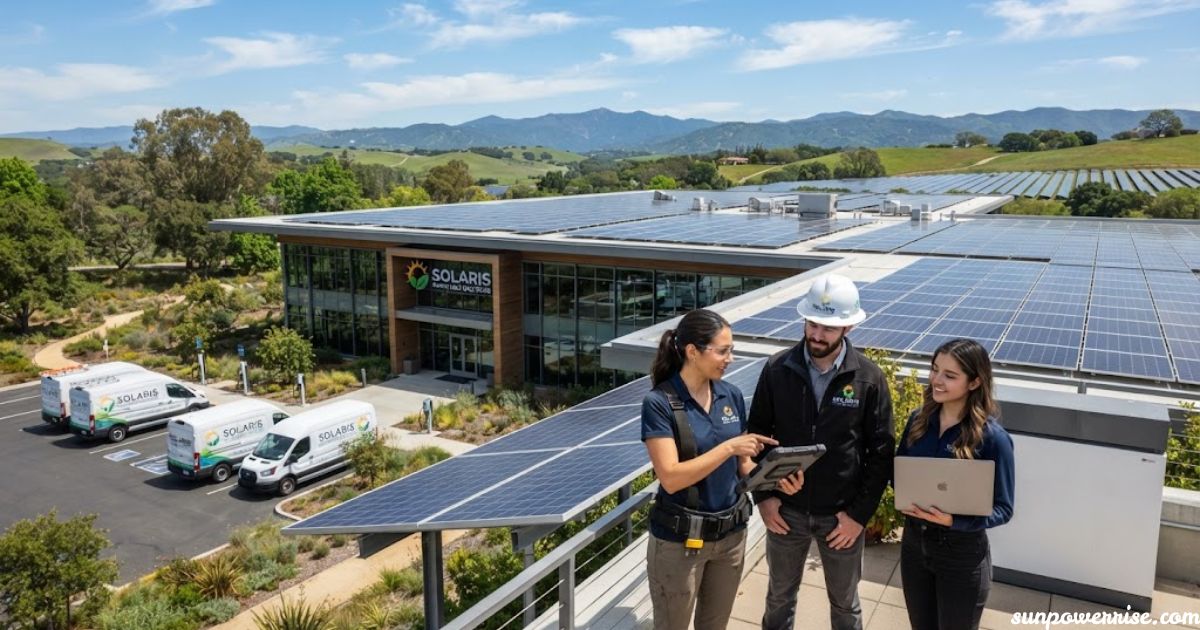
Solar lease payments usually land somewhere between $75 and $200 per month, and that range shifts depending on your local electricity costs and how many panels your customer’s property needs.
Most solar lease agreements run for a predetermined period of time, typically 25 years, and the terms spell out a fixed rate so your bill does not swing wildly the way an open market bill might.
Top solar leasing companies
When you start shopping around, a handful of names show up again and again among the biggest names in solar leasing. Most of these solar panel leasing companies sell through the same few nationwide brands, so it helps to know who you’re really dealing with before you sign anything.
Sunrun, Freedom Forever, and Trinity Solar dominate the space, and if a salesperson dangles free solar panels in front of you, there is a good chance they are steering you toward a lease before you even ask for a quote. I always tell people to look past the pitch and check the numbers instead.
Among popular solar leasing companies, Sunrun carries 2.6/5 stars across 2,798 reviews, Freedom Forever sits at 1.8/5 stars from 400 reviews, Trinity Solar holds 3.17/5 stars over 231 reviews, Momentum Solar shows 2.92/5 stars with 362 reviews, Sunnova scores 2.21/5 stars across 1,024 reviews, and PosiGen earns 3.19/5 stars from 178 reviews.
Those customer review scores should make you pause before you sign a solar lease. The negative reviews repeat the same complaints over and over: pushy salespeople, misleading sales tactics, and a frustrating lack of customer service whenever something goes wrong after installation.
How does solar leasing work?
Once you sign up for a solar lease, the process moves fast. A developer starts by designing the solar panel system for your specific roof, then locks in a contract agreement before crews begin installing solar panels on your homeowner’s roof.
System Operation and Net Metering
Your solar leasing experience really starts the moment panels installed on the roof begin turning sunlight into usable power, and this solar power system covers most of your daily electricity needs while any leftover flows out through net metering.
Monthly Lease Costs
Money is where most people focus, so let’s talk numbers. A typical monthly solar lease payment or monthly lease payment runs between $75 and $200 per month, though a smaller system might land closer to $120, and a bigger one closer to $150 or $200.
Electric Bill Savings
Nobody loves that a solar company owns and maintains equipment while you still write a check, but the trade shows up as a lower electric bill you can save between 10% and 30% on your full electric bill, and in real terms that might mean you save $30 compared to your pre-solar electricity bill.
Escalator Clauses
Watch for the escalator clause in your lease contract; most escalator rates sit between 1% and **5% **annually, and anything under 3% usually keeps pace better than the average electric rate increase in most areas. These clauses matter because monthly lease payments are built to rise every year, and the whole point is to reduce monthly electric bills, not slowly become as expensive as your old bill.
Tax Credits and Incentives
Now for incentives this is where a lease works differently than owning a brand new system. Under a lease, you do not own the solar panels, so you cannot claim the solar tax credit, the federal solar tax credit, local rebates, or performance-based incentives like Solar Renewable Energy Credits, often shortened to SRECs.
Company-Collected Benefits
The solar company’s responsibility is to collect those direct benefits instead, since ownership never transfers to you. Still, if you lack taxable income and cannot use those solar incentives anyway, a lease can be the smarter path; check the questions to ask before you sign a solar lease so you know exactly what you are giving up.
Maintenance and Repairs
On the plus side, maintenance and repairs become someone else’s job. Since the company keeps ownership, its crews handle solar maintenance, and thanks to the low failure rate of modern solar equipment, real issues are rare but when they happen, the company is responsible for a fix.
That said, you are somewhat at the mercy of how fast they respond, so read your contract for performance guarantees and clear repair timelines before you sign, especially any promise of timely service.
End-of-Lease Options
Every solar lease eventually reaches its end of lease, usually after terms of 20 to 25 years, matching the average lifespan of the panels on your roof. At that point you get three options: keep continue using solar power by renewing the contract, purchase the solar panels and take full ownership, or have the company remove the solar panels completely.
Pros and cons of leasing solar panels
Every choice has a flip side, so let’s talk trade-offs. On the plus column, a solar lease needs $0 down payment, which means no purchase and installation costs eat into your savings before you even flip the switch.
You get immediate energy bill savings and energy bill savings every month after that, thanks to predictable payments locked into your contract instead of a bill that can fluctuate.
You also get to utilise clean energy, enjoy worry-free maintenance since solar panel maintenance and repairs stay with the leasing company, and the whole setup delivers increased access to solar, sometimes phrased as increased access to solar for people who cannot handle the low upfront costs that ownership still demands.
Cons
Now the cons, and there are real ones. Because you don’t own the panels, you fall into the group of solar panel owners who cannot claim solar incentives; you simply can’t use tax credits, sit among those not eligible for tax credits, and lose out on federal tax credits and any remaining tax credit value, since access to tax credits stays with the company.
This adds up to lower long-term savings and possibly lower overall savings compared to traditional solar ownership, because leased panels can never truly break-even the way purchasing solar with cash can.
There is also no added property value; owned panels can lift home value, but residential panels under a lease do not, which creates real difficulty selling your home, since buyers hesitant to inherit someone else’s decades-long contract may need convincing before selling a home with solar panels works smoothly.
Solar lease terms and definitions
Before you sign anything, learn the handful of terms every lease agreement relies on. The lease term length describes the amount of time your contract stays active, and since it needs to roughly match the lifespan of solar panels, most run 20 years to 25 years.
Some agreements now offer flexible terms and buyout options so you keep more say over your system equipment down the road.
The lease payment, sometimes called the monthly payment, is simply what you owe each month, while the price escalator describes how those monthly lease payments increase on a set schedule, usually annually. All of this gets spelled out under the payment terms and conditions and the installation details section of your paperwork, so read it twice before you sign.
Does solar leasing really save you money?
Does a solar lease actually save money? For most households, yes. Because you make one flat monthly payment, you reduce utility electricity you would otherwise buy, thanks to the renewable power your panels generate.
The exact amount of money you save each per month depends on local electricity rates, your electricity expenses, and the overall energy demand on your property.
Utility rates tend to increase far more often than they decrease, so a low price escalator becomes the primary benefit worth chasing, since it keeps your leased solar panels valuable for longer.
Not every roof is a good fit for this arrangement, and some homes simply will not see meaningful property-level savings, so it pays to run the numbers before committing.
Is it harder to sell a home with a solar lease?
Selling a house with panels still attached raises real questions. If you are selling a home with leased solar panels, you generally have two main options: buying out the system or transferring the lease to whoever buys your place.
Both routes involve a few extra steps, so plan ahead. If you choose to own the system outright before the sale, you pay its fair market value and then sell it along with the house like any other upgrade.
If you would rather hand it off, the new owner has to apply and meet lease requirements before the buyer takes over, since the transferring the lease process, or the choice to transfer a lease outright, needs the company’s approval before you sell the house.
Solar lease vs. power purchase agreement (PPA)
A solar lease and its close cousin, the solar PPA, often get confused, but the key difference comes down to what you are actually buying.
With a lease, you pay for equipment; with a solar power purchase agreement, you pay for the power those panels produce instead.
Both fall under third-party ownership, meaning you forego the cost of buying anything outright and simply make monthly payments either way. Some states only offer one option or the other.
A PPA’s bill can shift with average production, since the payment fluctuates based on how much energy your solar lease or purchasing panels arrangement generates across 12 months, while a straight lease payment usually stays flat no matter the weather.
Popular solar lease and PPA companies: SunPower and Sunrun
Two names dominate the conversation around solar leases and PPAs: Sunrun and SunPower. Sunrun and SunPower both count among the pioneers of third-party-owned solar systems in this country, and its lease offerings come with a full-coverage warranty and no money down.
Choose Sunrun, and you get a performance guarantee: if your system dips below 95% of its estimated energy output, you receive a refund for the shortfall. The average cost of financing through Sunrun runs around $4.50 per watt.
SunPower takes a similar approach with its own production guarantee, and its responsibility covers maintenance, insurance, and ongoing monitoring of your solar system.
Financing through SunPower averages $4.89 per watt, a bit higher, but the company leans on premium-level products and, in my experience comparing notes with installers, often backs it up with stronger customer service than some rivals when panels produce less than expected.
Comparing solar financing options
Stack a solar loan, a solar lease, and a solar PPA side by side, and the differences become clear fast. A solar loan lets the homeowner stay the system owner, which means you keep the tax credits, the federal tax credit, and any SRECs for yourself, though your monthly payment can shift after 18 months depending on your loan terms, and it usually runs at a fixed-rate set by your solar installer.
A lease or solar PPA, on the other hand, involves zero upfront costs but hands maintenance responsibility and the tax benefits to the company instead.
Every option still uses net metering, and picking the best choice really depends on your credit score, your taxable income, how much of your energy production you want to control, and whether your contract carries a steep price escalator.
If you plan to purchase system ownership eventually, a loan wins on paper, but if your credit score rules that out, a lease keeps solar within reach.
Leasing your land to a solar company
Not everyone reading about solar leasing wants panels on their own roof plenty of landowners want to know about leasing land to solar companies instead. If you own open acreage, a developer may approach you about turning that space into a utility-scale solar farm in exchange for steady rental income over a long-term contract.
Naturally, the first question most people ask is how much do solar companies pay to lease land, and the honest answer is that it varies widely by state, land quality, and proximity to power lines, though many landowners see anywhere from a few hundred to over a thousand dollars per acre each year.
If you’re wondering how to lease land to solar leasing companies, the process usually starts with getting your property evaluated for grid access and sun exposure, then negotiating lease terms with a developer or broker before signing a long-term agreement, often 20 to 30 years, similar in structure to a rooftop solar lease.
FAQs
Is solar leasing a good idea?
A solar lease can be a great fit if you want $0 down payment and immediate energy bill savings without owning panels, though you’ll miss out on tax credits and lower long-term savings.
What are the top 5 solar companies?
Among the biggest names in solar leasing, Sunrun, Freedom Forever, Trinity Solar, Momentum Solar, and Sunnova rank as the most popular solar leasing companies homeowners compare.
Why don’t people want leased solar panels?
Many homeowners avoid leased solar panels because they can’t claim tax credits, see no added property value, and often face difficulty selling your home with an active lease attached, a real letdown for anyone hoping solar boosts resale value.