

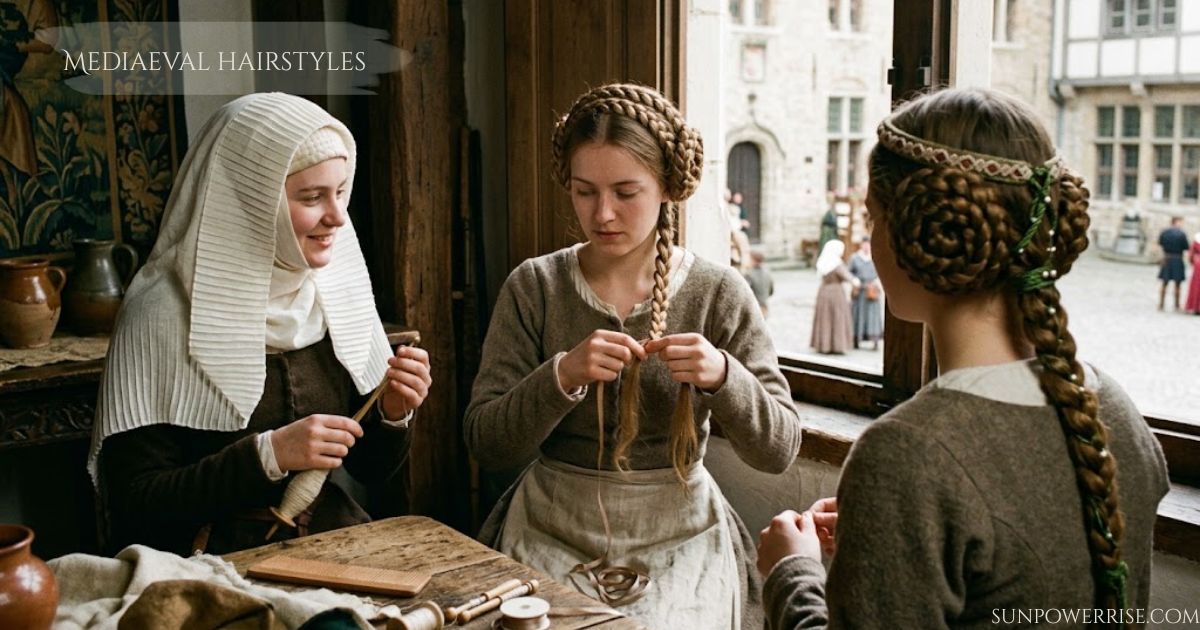
I always thought hair goals belonged only to modern celebrities, until I fell down a rabbit hole of mediaeval hairstyles.
We scroll through Pinterest and magazines for trendy hairstyles, and we credit Hollywood for every new look, from Jennifer Aniston’s classic cut to Blake Lively’s timeless locks and Kylie Jenner’s ever-changing style. But medieval-inspired styles proved that beauty tastes existed long before starlets and makeup artists arrived on the scene.
I love imagining a medieval era filled with royal feasts, chivalrous romance, and castle courtyards, where jewelled crowns and intricate braids ruled every gathering, and their braids showed true beauty in every strand.
Picture ten women preparing for a banquet, or seven friends getting ready for camping events, each working through a hair adventure with braids styled in a conservative yet ornate way. From work events to a 15th-century wedding, these mediaeval hairstyles carried a feminine style that still feels historically accurate and inspires modern trends today.
Crown Braid Mediaeval Hairstyles
A crown braid is the easiest medieval female hairstyle to try at home, and I still remember the first time I tried it before a big event. You part your hair down the middle, twist two thick braids on each side, then wrap them around the top of your head and secure everything with a simple hairpin.
This classic accessory frames your facial features nicely, and if you leave a few pieces loose, it gives off a relaxed, lazy feeling instead of a stiff look.
Old paintings show this style everywhere, including one painting of St. Catherine and St. Margaret, both wearing a crown made from their own hair with a dragon resting near their feet. A rope braid works the same way as a regular braid, only you twist the strands like rope before forming them into a braided crown around your head.
This unique twist on traditional hairstyles gives real regal flair, and it turns an ordinary Tuesday into an empowering Tuesday with almost no effort. Every accessory you add makes the whole hairstyle feel complete.
Updo Styles
Updos are my personal favourite because they feel elegant without much effort, and women wearing mediaeval hairstyles clearly agreed. Artist Girolamo Mazzola-Bedoli painted “Madonna and Child in a Landscape” with angelic hairstyling full of curls, twists, and braided details, the kind of look perfect for any formal event today.
Margaret III, Countess of Flanders, wore a bold updo with fleeky eyebrows that still steal the updo game in her old portrait, proving that side braids never really go out of style.
If you want an easier version, gather your top section and pin it into a loose up-do, letting soft voluminous waves or cascading curls fall naturally down your back.
A low bun with braided hair and a few bobby pins holds well through long banquets, and honestly it works for a lazy style day too.
You could even copy princess curls the way an empress might, and follow a simple Leia-inspired hair tutorial, since Princess Leia’s braided crown still shows up in film and television dramas everywhere. Any accessory, or even a few loose braids left hanging free, finishes the look nicely.
Head Pieces
Hair accessories are not a new invention at all; painter Sandro Botticelli captured this back in the late 1400s with his portrait of Simonetta Vespucci, whose tresses were knotted, twisted, and tied into an intricate headpiece made from pearls and fine fabrics.
That single knot and twist created real elegance, and it still inspires an intricate updo among fans of mediaeval hairstyles today.
For a softer version, curl your hair into loose curls or soft loose waves, then rest a delicate head chain across your forehead for instant natural beauty. Head chains and hair chains bring a bohemian flair, while flower crowns add a medieval romantic feeling perfect for anyone who wants to feel like a princess among knights.
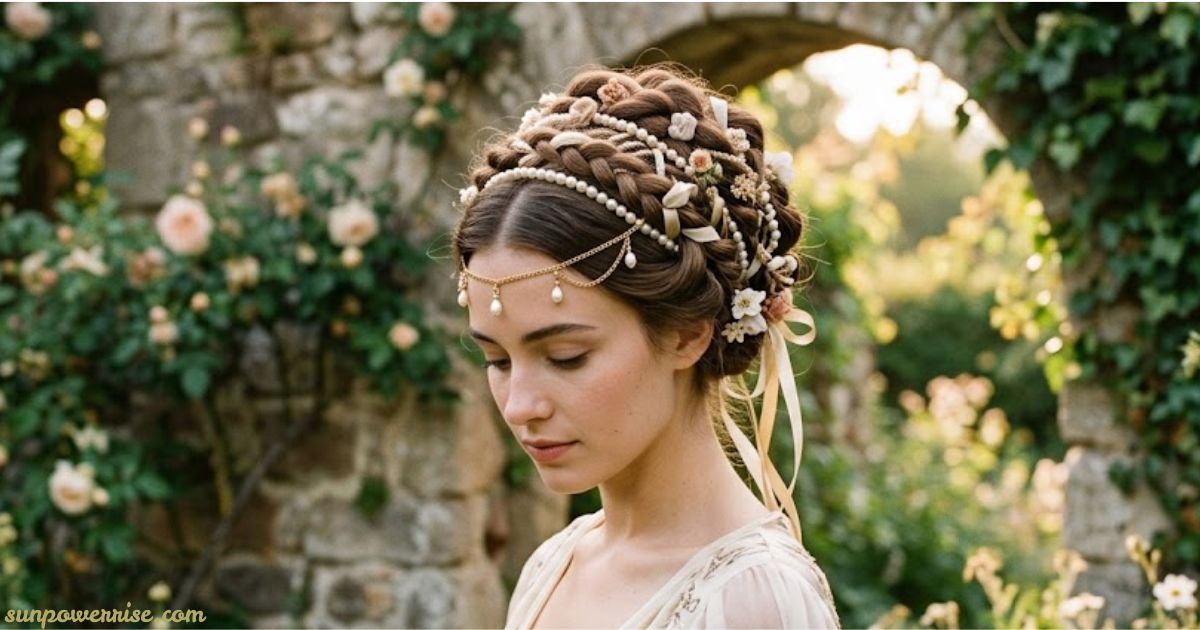
If braiding feels like too much work, simple half-up twists paired with ribbon accents, ribbons, or bows can turn plain hair into a captivating hairstyle.
Wear a flowing dress or a delicate dress alongside it, and this easy combination gives the same charm as a full hairstyle without needing extra effort.
Braided Styles
I learned to make 15th-century braids the hard way, through plenty of trial and error at camping events, and it taught me a lot about mediaeval hairstyles.
Start by using a brush or comb to divide your hair into two sections, then work in some hair wax so each part feels easier to control. Begin your three-strand braid right above the ear, close to your hairline, and secure both sides tightly with rubber bands or thread for extra firmness.
Once both sides are braided, fold them back and pin them near the front section, checking any old painting reference for guidance on length; I like mine reaching my nose line for a cuter look.
A fabric hairband hides any hair from behind and around the neck, while hair extensions add length if your own hair is short. This method takes real creativity, and it still shows off a lovely medieval charm.
If you want more texture, try twisted rope braids or a regular braid twisted into a fishtail braid, both giving a romantic feeling with almost no extra effort.
Waterfall Braid
A waterfall braid works differently: take a small strand into three strands, start a normal braid, then drop the bottom strand each time you add a new section, building a smooth cascading effect as you move around your head.
This unique twist works well for a half up style, and it gives that medieval goddess-style look real modern elegance. You can also let a few loose curls escape near your temples for a softer finish.
Finish the look with delicate crowns, tiny flowers, or a full flower crown resting gently on top, and secure any loose loops with bobby pins and a light coat of hair spray.
The Beachy Waves
In Middle Age Poland, artist Stanisław Samostrzelnik painted a shocking hairstyle for married women, since exposed hair was seen as scandalous back then. Looking at that old painting today, I find it hard to believe such a simple choice once felt so bold.
Back in 2015, beach waves became huge again, and I still think of those medieval rule-breakers every time I twist a curling wand to beachify hair before a night out.
Viking Knot Wavy Hairstyle
This look blends rugged charm with true medieval elegance, pairing loose, flowing waves that feel like windswept fjords with intricate knotwork at the crown of your head.
It carries a strong nod to Viking artistry, and honestly, styling it makes me feel a mix of grace and strength at once. Even modern tresses can channel a bit of ancient valour with this simple technique, proving once again why mediaeval hairstyles never truly go out of fashion.
FAQs
What hairstyles were popular in medieval times?
Popular looks included the crown braid, braided crown, low bun, loose curls with head chains, and elegant updo styles decorated with flower crowns and ribbon accents.
What is the medieval haircut called?
There wasn’t one single “cut,” but the closest style was the faux bob, seen in old portraits like Emperor Ferdinand’s, where a short, rounded shape framed the face. Most medieval hairstyles relied on length and braids rather than true haircuts.
Who had braids first, Vikings or Africans?
Braiding traditions go back thousands of years in African cultures, long before the Viking knot styles seen in medieval hairstyles for Norse warriors and travellers. Both groups shaped braiding into powerful traditional hairstyles, but African braiding history is generally considered older.
What were some popular hair styles in the 1400s?
The 1400s favoured intricate headpieces, pearls, and fabrics woven into updo styles, much like Simonetta Vespucci’s famous portrait by Sandro Botticelli.