

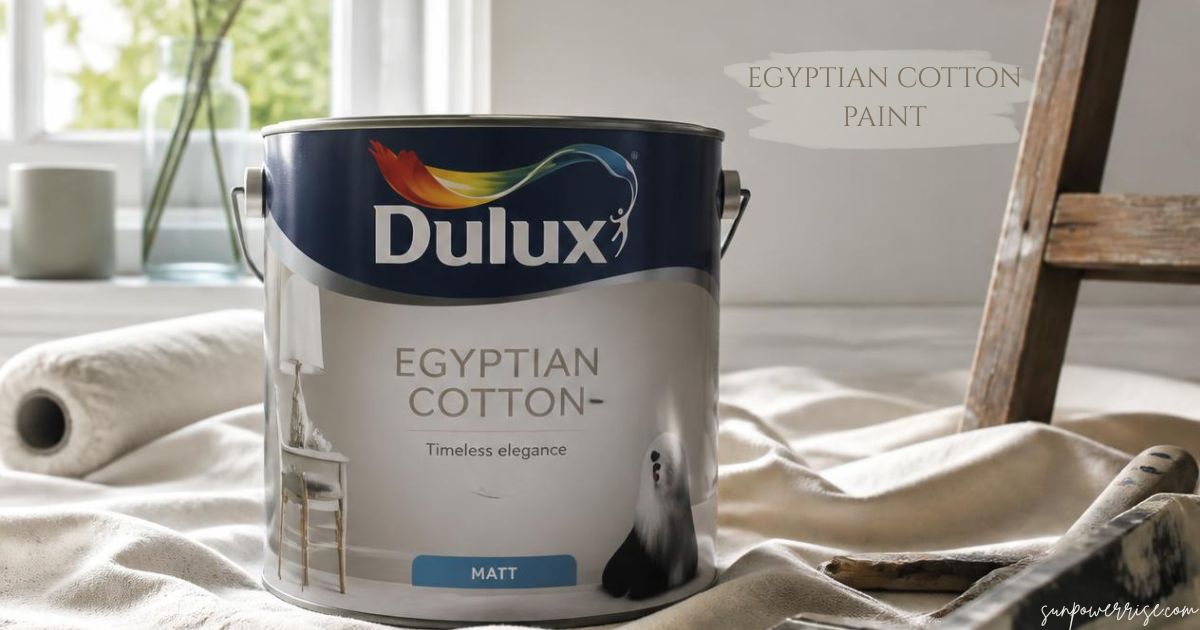
I still remember standing in the paint aisle with two tester pots in my hand, trying to decide between Egyptian Cotton Paint and Summer Linen for a wall in my own home. This is a classic painting dilemma, and it isn’t just me.
Anyone weighing up egyptian cotton paint against a similar shade runs into the same problem, because these two Dulux neutrals are among the most requested and recommended shades on any colour card, and honestly, they look almost identical at first glance.
That’s exactly why so many people end up choosing the wrong one and repainting the same rooms twice in one project. If you’re worried about ending up with a finish that doesn’t match what you pictured, you’re not alone; this is such a popular question that I made a short video on it.
Appearance & Undertones of Egyptian Cotton Paint
Base Undertones & Initial Comparisons
Once you actually put a dry swatch of each colour on the wall, the story becomes much clearer. Egyptian Cotton reads as a soft warm beige, creamy, soft, and easy on the eyes, carrying a slight yellow undertone that most people find genuinely pleasant.
Knotted Twine, by comparison, is a pale dusty khaki, and you can spot grey undertones running through it the moment the light shifts; it’s simply a cooler, more muted shade.
Cool Light Shifts & Summer Linen
In cooler light, Egyptian Cotton can mute slightly or even lean toward pink, which catches a lot of people off guard because it looks warmer online than it does on the actual wall.
Set it next to Summer Linen, which is lighter, fresher, and cleaner with less yellow and a more airy feel, and side by side the difference is obvious: Summer Linen is brighter, while Egyptian Cotton has more depth and softness.
This is where people get caught out, because Egyptian Cotton reacts more strongly to light than you’d expect. In cooler rooms, it can genuinely lose warmth and start to look muted, whereas Summer Linen stays far more stable and holds its character across different lighting.
Daylight Performance & Swatch Testing
A colour card simply cannot capture this; only painted swatches on your own wall will show the truth. In daylight, Egyptian Cotton holds warmth beautifully and stays balanced, while Knotted Twine reveals that dusty khaki tone more clearly, and if you were expecting a cozy beige, the result can be a genuine surprise.
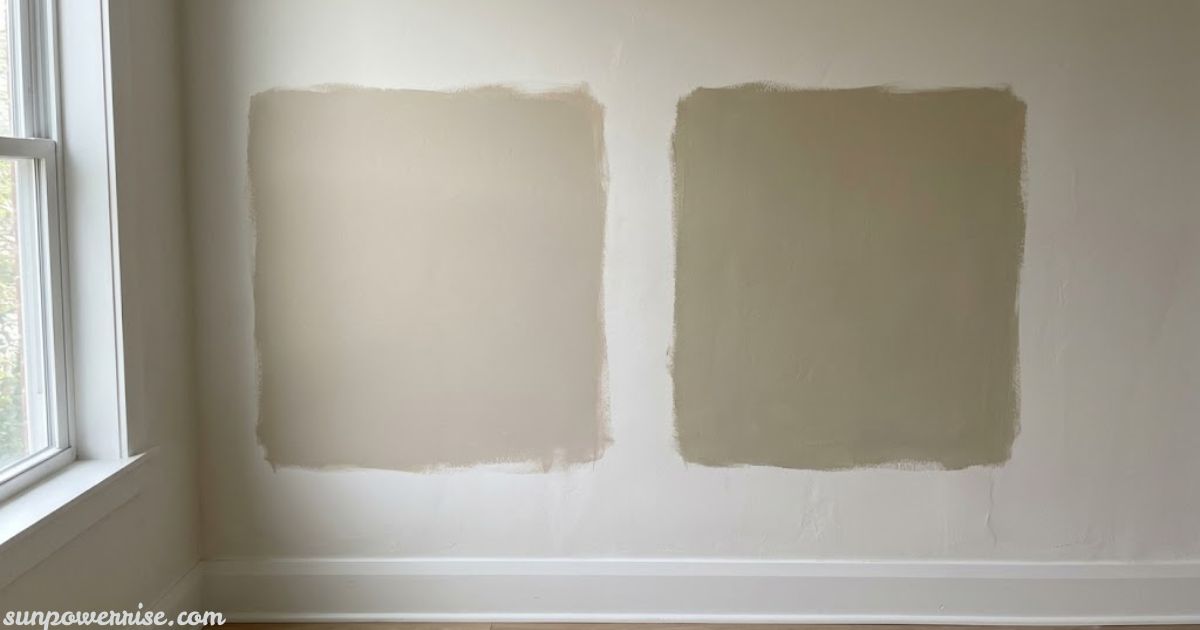
Egyptian Cotton is softer and more beige; Knotted Twine is dustier and more khaki. As described by Dulux, this dulux egyptian cotton paint is a grounded, warm neutral with a softer beige feel, making it the safer, warmer option for most homes.
Lighting & Room Suitability
Knowing where each shade actually performs makes the decision far easier. Knotted Twine suits a north-facing room that already has a calmer, slightly cooler neutral mood, while Egyptian Cotton tends to shine in rooms with good natural light, where its warmth feels intentional rather than overpowering.
If you’re working with smaller spaces, Egyptian Cotton brings genuine warmth and softness, and I’ve used it in both living rooms and bedrooms with excellent results. Summer Linen is the better pick for smaller or darker spaces, including north-facing rooms, since it adds freshness without feeling heavy.
Some people want their home to feel cozy and inviting; others want it bright and open, and honestly, one isn’t better than the other they simply do different things. Knotted Twine fits beautifully into modern, pared-back spaces that want a quiet, grounded feel rather than obvious warmer tones, while a hint of pink or yellow can creep into Egyptian Cotton depending on your lighting.
And here’s a tip from experience: if your floors have warm oak flooring, Egyptian Cotton will genuinely complement the wood tone, whereas Knotted Twine may clash or feel disconnected from it.
Which One to Choose
If there’s one mistake I see people make again and again, it’s choosing a colour based purely on how it looks online instead of running a real test in their own space. Watch how the light in your room changes throughout the day before you commit.
When people ask me which one to choose, I tend to lean toward the safer, warm neutral option. Egyptian Cotton is reliable and forgiving in almost every one of the rooms I’ve painted, and it rarely disappoints.
That said, if you want a touch more of a dustier, grounded character, Knotted Twine is the one to try instead, since it leans cooler with more visible khaki notes and slightly less cosy warmth. Either way, testing in your own light is always the right answer.
Undertones by Lighting & North-Facing Rooms
There’s more nuance to Egyptian Cotton than people expect. In a north-facing room, Egyptian Cotton can genuinely surprise you, because it’s been described as looking like a soft grey, occasionally even a sage green, and distinctly yellowy under certain lights.
This is exactly why I always encourage buying a tester pot before purchasing a full tin of egyptian cotton dulux paint, since the same shade can look different across different rooms in your own home.
If you have a north-facing space, Egyptian Cotton remains a great choice, and that comes down to its yellow undertones, which work to counteract the cool blue light that so often floods a north-facing room. Those undertones balance out the space beautifully and make the light feel noticeably warmer than it would with a cooler-toned paint.
Colours That Pair Well with Egyptian Cotton
Warm Tonal Matches
Once you’ve settled on Egyptian cotton, or any similar egyptian cotton paint dulux shade, choosing the right companion colours makes the whole scheme sing. Because Egyptian cotton sits within tonal-based colours that are yellow-based, you can lean into honeys, caramels, or other warm brassy accents for a matching palette.
Earthy Neutrals & Greens
Personally, I prefer earthy neutrals instead, and this popular colour scheme think sage green, olive greens, soft browns, warm beiges, and even crisp whites pairs beautifully with it, especially if you want that crisp contrast running through a room built from warm neutrals.
Classic White & Ceiling Contrast
White is a genuinely classic combination: painting the ceiling white while keeping Egyptian cotton on the walls in a living room helps draw the eye up and makes the space feel bigger.
It’s also a smarter alternative to stark bright white, since Egyptian cotton hides every mark, bit of dirt, and small scratch far better, and because it’s slightly warmer, it never feels flat or lifeless in a north-facing space with limited natural light.
Bold Statement Shades & Black Accents
Egyptian cotton is versatile enough to also handle bold, statement-making shades. I always encourage a black accent somewhere in the room, because it doesn’t make the space feel darker; instead, it gives real definition and stops the colours from floating across a scheme built from beige and warm neutrals.
A well-placed black touch adds modernity and helps define the room, whether through well-placed black accents like door handles, black handles on a cabinet, black sockets and switches, or small decor accessories such as a black frame or even a simple black vase on a shelf.
Beyond black, Egyptian cotton pairs beautifully with navy blue, deep olive greens, a splash of mustard yellow for a pop of yellow, and even warm rusty tones like terracotta.
FAQs
Is Egyptian Cotton Dulux grey or beige?
It reads mainly as a soft warm beige with just a hint of gray in dull light never a true gray, always a warm neutral at heart.
What colour compliments Egyptian Cotton paint?
Sage green, olive greens, warm beiges, crisp whites, and a touch of black accent through door handles or a black frame all pair beautifully with it.
Why is Egyptian Cotton paint so popular?
It’s such a favorite because it’s forgiving, reliable, and brings genuine warmth and softness to almost any room.
Which is lighter, natural hessian or Egyptian Cotton?
Natural hessian sits lighter and cleaner, while Egyptian Cotton carries more depth, softness, and a slight yellow undertone.
Does Egyptian Cotton paint look yellow?
Yes, it carries yellow undertones, and in certain lights it can look distinctly yellowy, though it usually settles into a soft, warm neutral.