

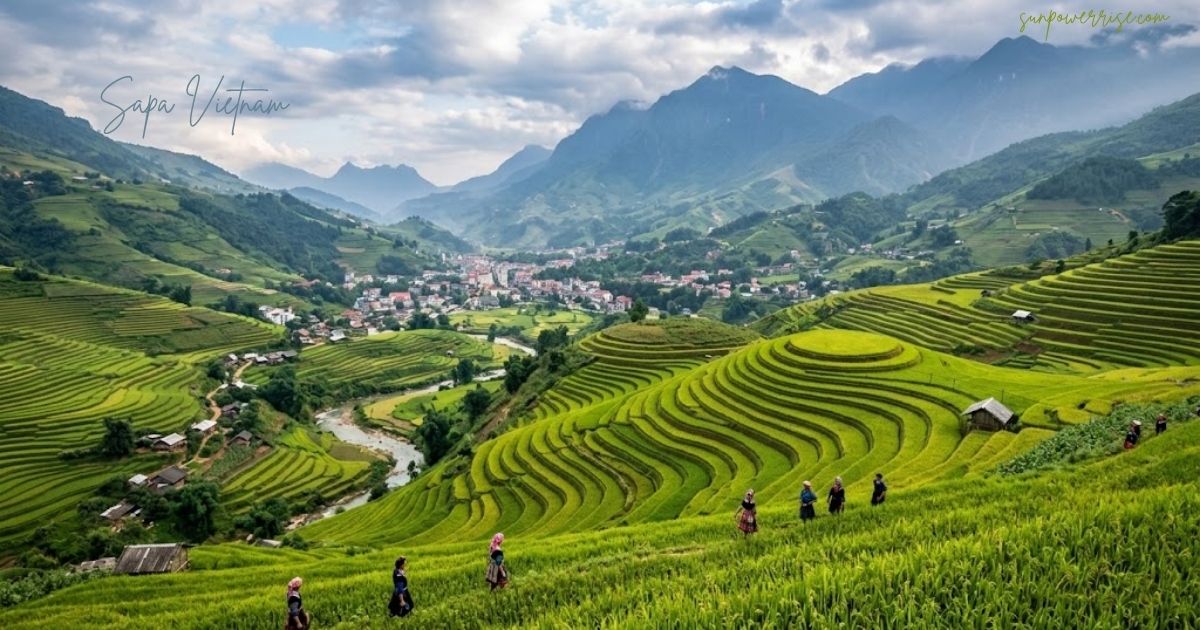
I still remember my first morning in Sapa Vietnam, a mountain town tucked into the hills of Vietnam that felt nothing like the coast or the cities I had already seen. Sitting six hours north of Hanoi, close to the border with China, this region sits at the top of most travellers’ bucket lists, and I finally understood why once the fog lifted over Muong Hoa Valley and the sharp bend of O Quy Ho came into view.
Five different ethnic minority groups call this region home, including the H’mong, Red Dao, Tay, Giay, and Xa Pho, and each community keeps its own culture and traditions alive in its villages, giving the whole area a real melting-pot feel.
The rugged terrain, paired with layers of golden landscapes and endless rice terraces, makes Sapa one of the best places in Vietnam for trekking, especially if you want something between beginner and intermediate-advanced.
I spent a full week talking to locals, some working in the tourism industry and some not, just to gather honest insider tips for this travel guide, and everything from how to get to Sapa to where to stay and what to do comes straight from that trip.
Where To Stay in Sapa Vietnam
Picking where to sleep in Sapa Vietnam shapes the whole trip, and I found three very different bases worth trying.
Sapa Town Boutique Stay
In the Sapa town center, the Sapa Relax Hotel & Spa works as a small boutique hotel only a 12-minute walk from Sa Pa Lake, and for $35/night I got warm tea at reception, a large room, and genuinely friendly staff.
Out toward Muong Hoa Valley, the Sapa Bamboo Eco is a bungalow-style homestay sitting right beside the rice fields, about 15-20 min from town, while further along toward Ban Ho the Sapana Mountain Retreat is a hillside lodge built for rice terraces views, priced at $40/night and famous for its wooden bathtub looking out over the terrace rice paddies.
Valley Village Homestays
Villages inside the valley give you a totally different kind of stay. Lao Chai, home to the H’mong People, sits closest to Cat Cat Village and keeps plenty of tour guides ready to walk you through the backroads and into local houses, which makes it a smart home base.
Ta Van, mostly Giay People, has paved roads, small hotels, and even a few bars, so it suits anyone tired of the overtourism in town, while Hau Thao, also H’mong, keeps rough trails instead of streets, fewer shops, and a tighter community vibe.
Over in Ban Ho, mainly Tay People, the jungle-like foliage and waterfalls make it the pick for nature-lovers, and all four villages run homestays along the river.
Mountain Retreats & Town Base
Further out, places like Sapa Hmong Bungalow Homestay, run by Asua and his family, offer a peaceful retreat among the valleys and highlands. For a bigger splurge, the Topas Ecolodge sits inside Hoang Lien National Park, holds a Unique Lodge rating from National Geographic, and spreads 33 rustic mountain bungalows across the mountainside, each with panorama views.
After that, the Greenland Sapa Hotel became my 1 week home base back in town, with spacious rooms that stayed affordable, plus a restaurant serving local food right downstairs.
HIKING
Sapa Village Trekking Routes
Trekking pulls most visitors to Sapa Vietnam, and the little remote villages scattered around town give the best reward for the effort. Sin Chai sits just 5km, or 3mi west, of town, Ma Tra is 7km away to the 4mi northwest, Nam Cang stretches out 40km, or 25mi south, into deep country, and Y Linh Ho, 4mi southwest of town, has some of the best Hilltop Views anywhere near Lao Chai.
Reaching them means walking through a valley by motorbike or on foot, since real cultural immersion only shows up once you leave the paved streets.
Y Linh Ho Route Experience
My favourite route started at the school in the village centre of Y Linh Ho, reached by motorbike taxi, before an hour-long descent through rural scenery full of minority village huts, tumbling waterfalls, wandering ducks, and chickens.
The gravelly road turns into a bumpy road in places, so sneakers or boots work fine, and the panoramic views the whole way down are hard to beat. Inside Hoang Lien Son National Park, trails cut through dense forest, bamboo groves, and high ridgelines rather than open terraces, with the Ta Phin Valley Trek running 9km, or 6mi, from Ta Phin Village at a gentle difficulty 2.
FANSIPAN MOUNTAIN
Fansipan Mountain stands as the highest point in Vietnam, and the cable car and funicular combo gets you close to the top without breaking a sweat, opening up 360° views across terraced rice paddies, small villages, and winding mountain roads, plus a temple complex right near the summit.
A round trip on the cable car runs about $32 round trip, though I heard plenty of warnings about a foggy summit ruining the payoff on cloudy days.
Walking up instead takes 8 to 10 hours across steep mountain terrain, mostly along the 6km Fansipan Trail, and I’d recommend a guided tour for about $70 rather than going solo.
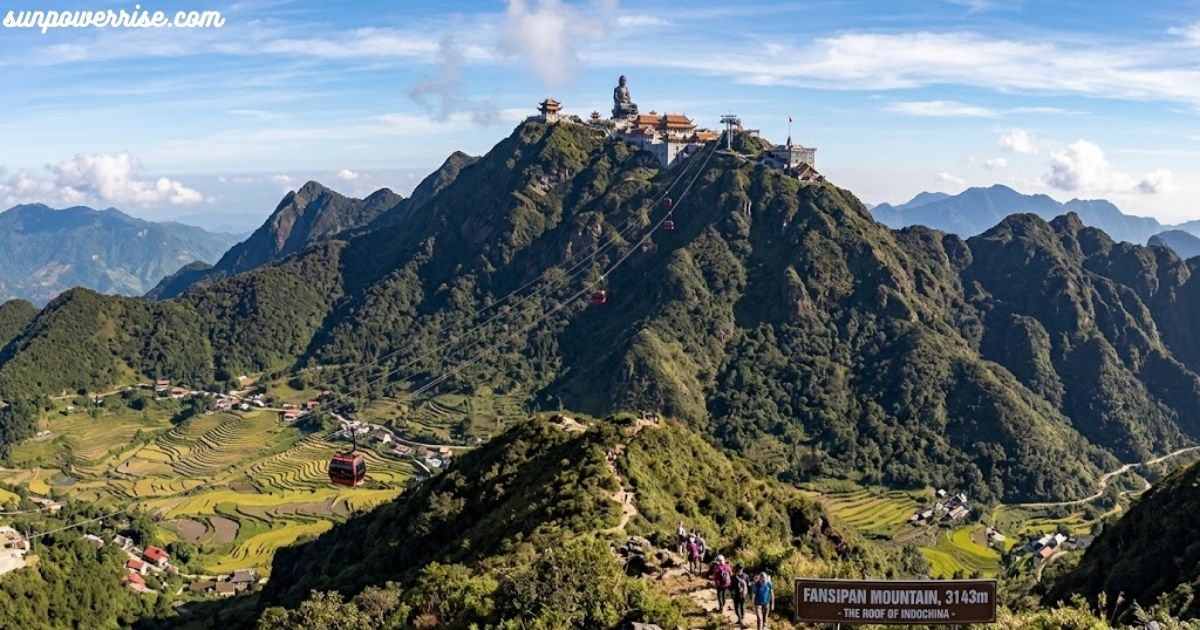
You can catch the cable car from sun plaza in Sapa town, and once up top you can wander past the buddha statue and the pagoda, which makes for one of the better hiking days in the whole Sapa Vietnam region even for people who only ride up.
SAPA MARKET
The Sapa Market works as a big indoor market selling a mix of tourist tchotchkes, sturdy cold-weather clothes, and everyday local goods, and the food stalls tucked inside are worth seeking out on their own. Once night falls, the same spot turns into a lively night market with street foods and clothes spread across tables outside.
Sellers here don’t push as hard as at Ben Thanh Market in HCMC, and haggling feels relaxed, since you can usually land a 40-60% asking price without any pressure.
Beyond bargains, the market doubles as a hub for fresh produce and artisan crafts, so it makes a genuine souvenir stop and a great spot for people watching. Don’t leave without trying the chestnut cakes, a warm local snack that sellers hand out fresh, and one of the easiest ways to taste everyday Sapa Vietnam in a single afternoon.
CAT CAT VILLAGE
Cat Cat Village gets pitched as a window into the Hmong community, one of the most photographed corners of Sapa Vietnam, but the reality feels mixed. Shops here rent out traditional local outfits for photos, though these are often Chinese Hmong designs rather than anything truly local, made mostly for photo shoots inside a fairly manmade valley, next to stalls stacked with Chinese-made souvenirs and low-quality food.
Still, the setting itself has real charm, with a waterfall-laden valley, wooden bamboo bridges, and picturesque mountain views stretching out from the path.
It sits about a 25-30 minute walk from town, down through layers of rice terraces, and the entrance fee costs 25,000 VND, or $1 per person, paid right at the front gate. Inside, you’ll pass sellers offering trinkets, walk through tidy gardens, and finish near a small waterfall at the bottom of the valley.
ETHNIC VILLAGES
Real cultural immersion in Sapa happens out in Muong Hoa Valley, not inside town, and the easiest villages to reach on your own are Lao Chai, Ta Van, and the lower stretch of Y Linh Ho, best reached by car or motorbike unless you’re already staying nearby.
For something gentler, a no-trek tour covers parts of Lao Chai and Ta Van while stopping at the Fanxi viewpoint cafe, giving you solid sight-seeing without the sweat of a full hike, and it also swings by a Red Dao foot bath spa on the way.
The Red Dao ethnic minority built a real name for its herbal baths, and Sapanapro in Ta Phin runs a version that feels upscale yet stays affordable, using herbs pulled straight from local farms for a mix of cultural immersion and pure relaxation.
A soak usually lasts 20 minutes and costs $5-10, and booking a Ta Phin Bath tour ahead of time makes planning simple. Across the wider valley, diverse ethnic groups each keep their own language, dress, and customs alive, so anyone chasing a less touristy experience should build in time for more than one village.
SAPA TOWN
Sapa town ranks as one of the most touristy spots in Sapa Vietnam, and that comes with a trade-off: the commodified culture feels a bit thin in places, but the tourist infrastructure is genuinely solid.
Cau Giay, the main cobblestone boulevard running through the centre, is lined with fusion restaurants and souvenir shops you won’t spot anywhere else nearby. Beyond the shopping strip, Sapa Lake, a pretty urban lake, sits next to a small park, and a sunken walkway wraps all the way around it, perfect for a romantic stroll once the evening lights come on.
Sapa Square feels like its own attraction too, a sunken stone plaza framed by white stone steps that reminded me of a small European amphitheatre, big enough that I ended up playing frisbee there with a few locals.
Streets nearby are covered in murals, next to a landmark stone church and the striking Sun Plaza building. Away from the centre, the narrow streets climb up every hill, so a short walk can feel like a Rocky Balboa training montage. Still, chatting with the local community while souvenir browsing through the cafes and restaurants scattered around town is part of the fun.
WHEN TO VISIT SAPA
January and February bring the harshest weather, with highs around 10°C, or 50°F, plenty of cold air, thick foggy mornings, and no heating in some hotels, so outdoor plans get risky. March and April flip that completely, offering moderate temperature, deep green hills freshened by rain, and the lively rice-planting festival in early March.
By May and June, the air turns more humid, temperatures hover near 20°C, or 68°F, and this stretch marks the planting season, worth timing a visit around if you want to watch or help farmers work the fields.
July and August pull in the biggest crowds, pushing highs toward 30°C, or 86°F, with light rains rolling through and the golden rice terraces at their most photogenic. September and October fall inside typhoon season, so it’s smart to plan around those months entirely.
Things cool back down through November and December, when rolling fog drapes over the valleys and the Christmas season turns the town almost magical, making this stretch my pick for a serene getaway in Sapa Vietnam.
FAQs
Is Sapa in Vietnam worth visiting?
Yes. Sapa Vietnam rewards you with misty mountains, layered rice terraces, and warm villages you won’t find anywhere else. Few places in Vietnam feel this unforgettable.
Why is Sapa so famous?
Sapa is famous for its rugged terrain, golden rice terraces, and five ethnic minority groups, including the H’mong and Red Dao, whose culture and traditions feel genuinely alive.
Is Sapa a tourist trap?
Parts of it are spots like Cat Cat Village and Silver Waterfall lean over-touristed — but venture into Muong Hoa Valley or the surrounding villages and it stays refreshingly authentic.
How many days is enough for Sapa?
3 nights is a solid start, giving you time for one proper trek, a stop at Sapa Market, and a visit to a homestay in the villages.