

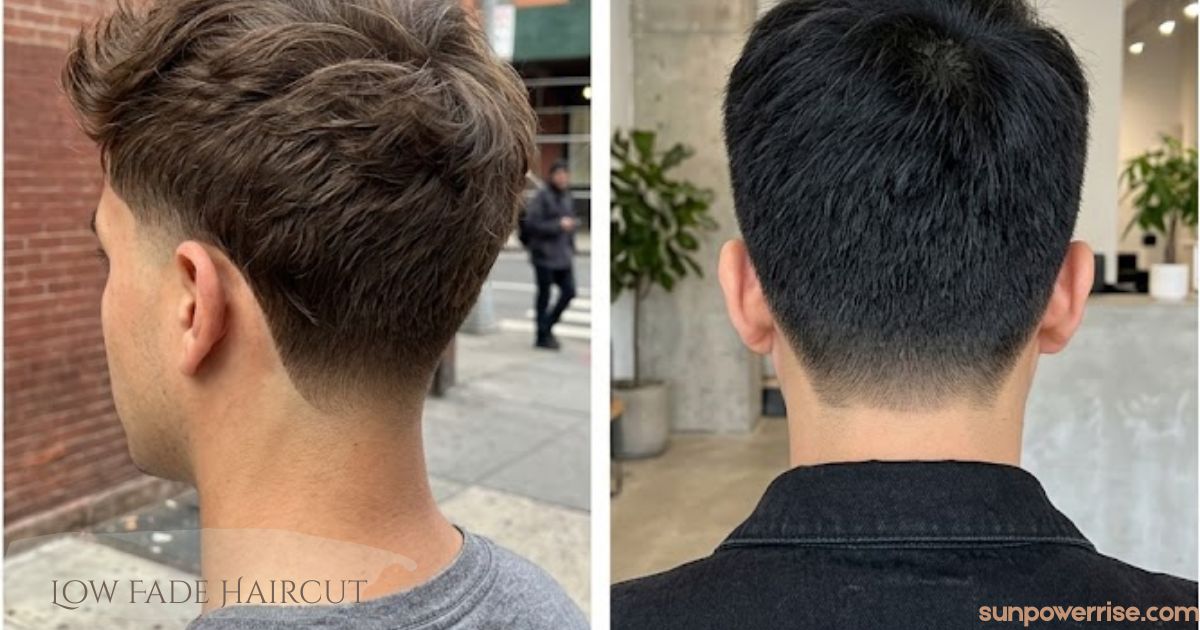
A low fade haircut sits right at the edge between bold and everyday, and once you understand the basic idea, picking your next cut gets so much easier. At its core, a fade haircut (often called a taper fade) is really a cutting technique, not a standalone style; it can be dropped into almost any hairstyle to give it a cleaner finish.
I’ve noticed that clients who want an understated style almost always ask for this version first; it suits first-time fade wearers, business professionals, and anyone who isn’t ready for something buzzed all over.
Low Fade Haircut
A proper low fade haircut doesn’t need a full head of hair on top to look good it works whether you keep length or trim it close, because the dual-length style and the gradual transition are what carry the look, not volume. Whether your hairstyle leans oval, square, or somewhere between, this cut adapts, and with basic maintenance every 2-3 weeks, it holds its desired look without much fuss.
The barber works with different lengths, blending short to long so the hair moves from the top down toward the sides and back without any harsh break. With a true low fade, the shortest part usually sits around half an inch to one inch above the ear, and from there the graduation runs upward, staying subtle rather than sudden.
This is why the fade line rarely looks harsh or blocky when it’s done right; good precision keeps everything blended and smooth, moving gently from light near the hairline up into dark near the crown.
Craftsmanship and Head Shape
A skilled barber will also read your head shape before touching the clippers, since the fade haircut should follow your head naturally rather than fight it. Some barbers, including well-known names like Manhattan Barbershop in places like Manhattan business districts, build a reputation on getting this modern edge just right for their Midtown clients, keeping the styling simple while the cut itself does the work.
What Is a High Fade Haircut?
Where the low fade haircut stays quiet, the high fade haircut goes the other direction entirely. This is a dramatic cut where the sides get closely cropped, sometimes taken almost to the scalp, while the top is left noticeably long, creating a lid effect that frames the face.
High-Contrast Placement
Instead of the gradual taper you get with a lower version, this style features a far more prominent transition, starting the taper as high as 2-3 inches above the ear, right near the top of the head. That placement gives the maximum contrast and high-contrast finish that makes this the boldest option in the traditional fade family, and honestly, it’s the one that turns heads fastest.
Statement Look and Face Shapes
Men who want a statement look think athletes, creative professionals, or anyone building a personal brand tend to gravitate here because the dramatic contrast photographs well and reads as confident from across a room. It suits round faces and square faces especially well, since the significant height it creates balances out wider proportions.
Upkeep and Hair Type
The trade-off is upkeep: this modern, attention-grabbing cut needs touch-ups roughly every 1-2 weeks to stay sharp, since growing out sides ruins the striking silhouette fast. It also pairs beautifully with thick hair, which becomes the focal point once the sides are stripped back, showing off real expert barbering and skill with the clippers.
Low fade haircut vs. High Fade: Key Differences
Once you line the two up side by side, the differences become obvious fast. Fade placement is the biggest one: low fades begin their taper above the ears, while high fades push that starting point much further up, closer to the temples, sometimes with skin literally shaved at the base before the hair lengthens out. In terms of overall look, a low fade haircut stays subtle with a gradual blend, while a high fade leans high-contrast and works best if you’re chasing a dramatic style on purpose.
Maintenance splits them too: high fades demand higher maintenance because the sides cut short grow out visibly within days, whereas low fades stay a bit more flexible, even though regular touch-ups still matter if you want it looking fresh.
As for who they suit, both cuts genuinely work across most hair types and textures, but if you’re carrying thick hair, a high fade often wins simply because shorter sides make easier styling part of your daily routine.
Low fade haircut Styling Options
This is where the low fade haircut really gets fun, because it slots into almost any top style without a fight.
Pompadour Pairing
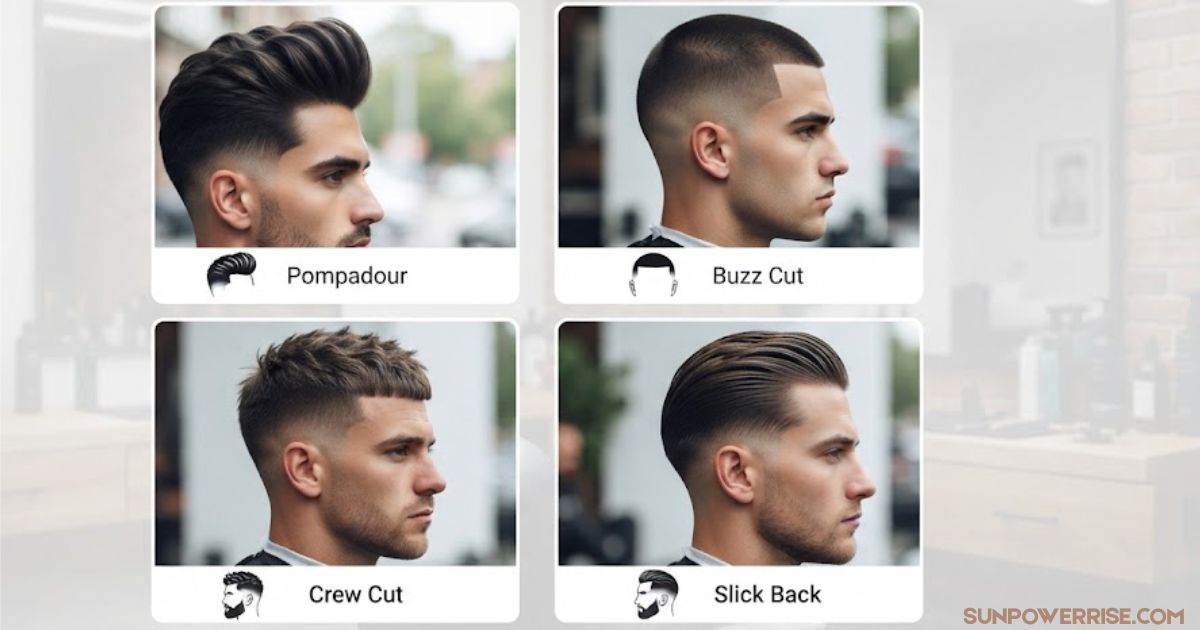
The pompadour, made famous by Elvis Presley and James Dean, is a mid-century style that still works today pairing it with a low fade haircut gives that old throwback trim a contemporary twist while keeping the timeless pompadour look intact; you sweep the hair up and back over the top of the head, using a blow dryer and a bit of pomade to hold it, and the result stays clean, sharp, and modern.
Upgraded Crew Cut
The crew cut, long considered the default men’s haircut, gets new life too. Normally, it’s just clipped close on the back and sides and longer on top, a plain short-back-and-sides cut that can feel like a blank canvas, but swapping the set-menu single grade for a proper low fade haircut keeps it smart without drifting into boring territory.
Buzz Cut Enhancement
The buzz cut pairs surprisingly well too, since it’s already the easiest style to maintain with just hair clippers and no real styling needed; adding a low fade haircut spices it up without losing that easy maintenance, and it works across hair types, from super-fine hair to coarse afro hair, where a line up can make things extra sharp.
Softened Slick Back
Even the classic slick back, usually worn with a disconnected undercut that gives it real attitude and an aggressive appearance, softens nicely with a low fade haircut. The gentle graduation above the ears keeps the trademark contrast but delivers a more understated look, which works well in a professional environment where extreme haircuts don’t fly.
Versatile Styling Options
To style it, comb pomade through damp hair and pull straight back for that timeless look and sophisticated appearance, which pairs beautifully with mid fades; or try a textured crop using matte clay or fiber for piece-y textured definition, which suits any fade height, especially mid to high fades.
A side part with a clean part and light pomade looks sharp for business settings with low to mid fades; for messy/natural, casual look days, just towel dry and add sea salt spray or light cream, letting natural texture show; or go brushed forward for shorter top hair, a European-inspired look that suits mid to high fades.
Hair Type Considerations
Not every hair type takes a fade the same way, so it’s worth knowing what to expect. Straight hair shows fade types and fade lines the most clearly of all, meaning precision from your barbers really counts, since sharp fades stand out fast on this texture.
Wavy hair pairs beautifully with mid to high fades, since the contrast against textured top hair and natural waves adds real dimension to the overall look.
Curly hair can look genuinely stunning with a fade, though it needs a barber experienced with curly textures low to mid fades tend to work best here, letting the curls stay the star of the show.
Coily hair and kinky hair both take fades beautifully too, but only with the right specialized technique. For thin hair, low to mid fades can actually make it look fuller through contrast, while super high fades should be avoided since they risk showing thinning on top. Thick hair, on the other hand, pairs perfectly with high fades, since the dramatic contrast turns real volume into a genuine feature rather than something to manage.
Who Should Get a Low Fade?
Choosing between these cuts really comes down to preference, plus a few practical factors worth thinking through. Taper fades of any height work well for men going through the big chop after chemically-treated hair, since shaving the back and sides gives you a personalised style without committing to a full buzz cut in one sitting.
Gradual Length Changes and Routine
If you’re carrying extra length already, a low fade haircut makes sense as an in-between haircut you go shorter without an ultra-dramatic change overnight. Prefer a simpler daily styling routine? A high fade might suit you better, since sides cropped close mean less effort once you’re out the door, even though you’ll see the barber and clippers more often. Face shape matters more than people expect.
Versatility Across Face Shapes
Outside of that one caution, this cut stays wonderfully versatile; round, square, heart-shaped, even hexagonal face types can all find a low-fade style that flatters them. Looking closer at face shape guidance: an oval face is balanced and proportionate, so choice comes down to personal preference and lifestyle.
A round face does better with mid fades or high fades that add illusion of a longer face, since low fades can make things look rounder; a square face handles skin fades nicely thanks to strong jawlines and angular features; a long/rectangular face benefits from low fades since they avoid extra height, and drop fades add visual width; a heart-shaped face looks best with mid fades to balance a wider forehead against a narrower chin, drawing focus toward the middle of the face; and a diamond face pairs nicely with low to mid fades.
FAQs
Which fade is better, low or mid?
It depends on your face shape and style preference; mid fades offer more versatility, while low fades look more subtle and professional.
What is the best low fade haircut?
The low taper fade paired with a textured crop or quiff is widely loved for its clean, sharp, and effortless look.
What is a 2 fade haircut?
A #2 fade uses a clipper guard leaving about ¼ inch (6mm) of hair, giving a neat, short, and low-maintenance finish.
Which fade is most attractive?
The mid fade is often called the most attractive and flattering, blending sharpness with balance for almost every face shape.