

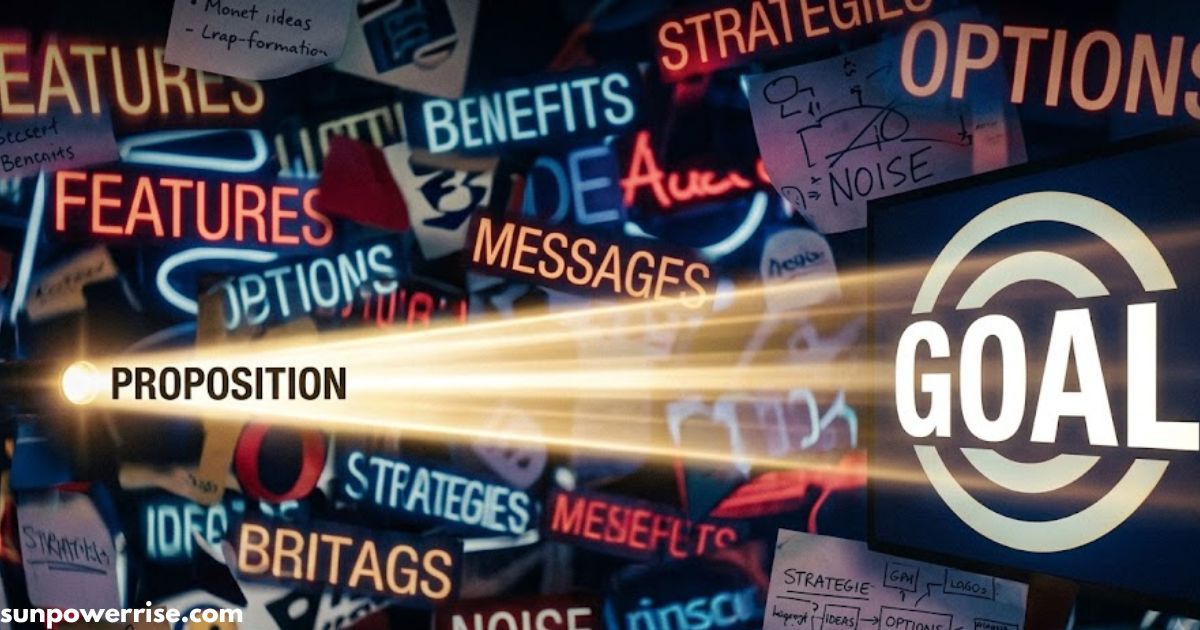
I have sat through more brainstorm meetings than I can count with a single-minded proposition in hand, and almost every session starts the same way: someone opens the brief, reads the objectives, and asks the room to find the killer idea hiding inside a stack of notes.
Over the years, I learned that the real work is not chasing fancy concepts; it is finding one compelling campaign message that gives your product or service a unique voice in a marketing landscape crowded with generic campaigns and repetitive campaigns.
That message is the single-minded proposition, or SMP, and it is the North Star that guides your communication strategy, your creative team, and every advert or social post you publish.
What Is a Single-Minded Proposition?
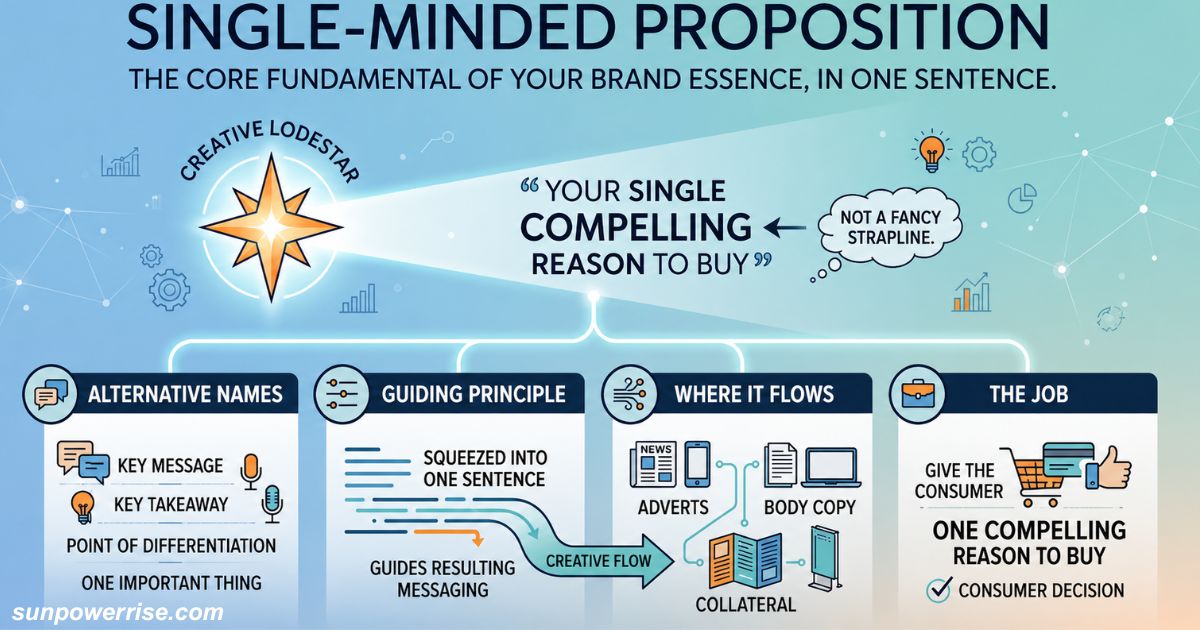
A single-minded proposition is not a fancy strapline; it is the fundamental core of your brand essence squeezed into one sentence. People call it by different names: a Key Message, a Key Takeaway, a Point of Differentiation, or simply One Important Thing, but the job stays the same: give the consumer one compelling reason to buy.
It works like a creative lodestar sitting at the heart of your idea, guiding the resulting messaging that flows into every advert, body copy line, and piece of collateral.
Notice how the word single carries the whole weight here. A short, clear statement beats a vague, simple statement every time, and the best examples prove it.
Cascade Complete claimed it could make the sink redundant, while L’Oréal built a marketing story around Because you’re worth it, and M&M’s kept it visual with Melts in your mouth, not in your hand. Apple’s iPod turned a technical benefit into 1000 songs in your pocket, VW Beetle told drivers to Dare to be happy, and Persil built decades of credibility on Dirt is Good.
Lean on precise numbers whenever you can, because a percentage or a profitability increase adds real weight to your claims and cuts through noise better than empty waffle. Skip the temptation to list every benefit your brand offers in one purchase; pick one powerful reason and let it become your tagline’s backbone.
Every social post and creative brief should protect this same focus, because listing too many benefits kills efficiency and makes the audience tune out.
The Rhythmic Power of a Single Message
Think of a campaign as a heartbeat. It only works when there is one clear rhythm, not a dozen competing ones, and the same rule applies to your brand.
Without a strong SMP, your message drowns in noise, your audience loses interest, and you end up in the sea of sameness with every other brand chasing the same consumers. I have watched teams pour their purpose and direction into a big idea only to see it fail because nobody agreed on one truth to build around.
Laying the Foundation for Potential
Give your team clear examples, lay the foundation of creativity at the top of the creative brief, and you set up every downstream idea to hit its full potential. The value of a sharp SMP comes from original thinking, not recycled marketing clichés, and every layer of messaging should point straight back to it.
How to Write Your SMP
Map Every Feature and Advantage
Every SMP I have ever helped write starts with pen to paper, even in the age of screens. Sit down, whether you work in agribusiness, animal health sectors, or fast groceries, and make a list of every feature your product or service offers, no matter how big, dramatic, subtle, or specific.
Write down what makes it unique, what the competition can’t claim, and what your reputation for customer service or credibility gives you an edge on; own that list before moving on.
Translate Features into Human Benefits
From there, turn each feature into a real benefit for the end user. Ask what it means for their quality of life, their emotions, and their heart, not just their wallet.
A fitness products brand’s audience insight might be that potential customers want to feel proud, not just look good; a grocery brand’s core benefit might be groceries at the door in 30 minutes rather than “we deliver fast.” Use data, understand your target market, and speak to the personas and targets you already know.
Select and Stress-Test Your Core Idea
Now pick your winner. Draft a shortlist, run it through several iterations, dilute nothing, and choose the one bright idea the compelling idea that earns front-and-centre placement over every overstuffed ad claim.
Test the fit: does it sound believable, memorable, and persuasive when you say it out loud? Einstein said if you can’t explain simply, you don’t understand well enough, so imagine your killer proposition on a billboard in Piccadilly Circus on a Friday night, and ask whether a stranger walking past would stop, feel relatable emotion, and remember your brand’s story.
Ground Your Message in Human Truth
An elevator pitch works the same way. It should sound confident, specific rather than generic, and free of jargon that dilutes your north star. Research shows people respond to one bright, short sentence far more than a paragraph of copy, so trust the process, protect your purchase-driving idea, and let it guide the tone of voice across every campaign.
Remember, these rational literal things the plain features and benefits on your list only earn their place once you connect them to a deeper human truth, because a headline built only on main value claims, without heart, rarely beats a line as simple and human as Dirt is Good.
SMP vs Tagline
An SMP and a tagline are cousins, not twins, and mixing them up causes real confusion inside a creative process. The SMP is customer-facing only by accident; most of the time it stays internal, guiding the team rather than reaching public consumption.
A tagline, on the other hand, is the public line catchy, short, built purely for customers. Nike’s guiding thought, Everyone can achieve through movement, sits behind the public line Just do it, while Apple iPod’s SMP and tagline happened to match exactly: 1000 songs in your pocket.
Compare that to a USP, or Unique Selling Proposition, which proves your tangible difference with a factual reason, the way FedEx guarantees Guaranteed overnight delivery.
In short: the SMP shapes the message, the tagline says it, and the USP proves it, and understanding this unique role keeps every one of your communications aligned instead of working against each other, no matter how much value each core internal idea carries.
Simple Single-Minded Proposition Template
Try this structure: For [target audience], [brand name] is the [category] that [core benefit] or [promise], because [key reason] to believe. FreshBox used exactly this approach for busy parents, promising a meal kit that saves time without sacrificing taste, because every recipe is ready in 15 minutes a promise the audience could trust and believe the moment they read it.
Common Mistakes When Creating an SMP
Even good marketers fall into the same pitfalls. The biggest mistakes happen when you cram in too many benefits and ideas, until the message starts to confuse rather than inspire. Fix it by picking one clear promise and building everything else around it.
Another common trap is writing from your brand’s perspective instead of the customer’s point of view; people don’t care about your logic and facts as much as they care what’s in it for them, so always ask how a line will make someone feel and remember. Watch out for clichés and buzzwords too “Quality service” or “innovative solutions” sound safe, but they blur into every other brand’s picture. Use real language instead, the kind that can paint a picture and spark emotion honestly.
Finally, stay true to your brand’s truth. Overpromising or ignoring brand reality breaks trust fast, so before you rewrite a single line, ask whether it’s authentic, honest, and something your brand can actually deliver.
How to Test if Your SMP Works
Once you’ve written a line, put it through a simple test. Give it a quick sense check: can someone understand the main point in five seconds without feeling forced or confused? If they have to read it twice, it’s not yet clear or focused enough.
Next, check memory. Ask a friend to repeat it back after a short break; if the words don’t stick, it isn’t easy to remember, no matter how clever the wording sounds.
Then check authenticity and product fit: is the line honest and believable, or is it just wishful thinking dressed up as truth? A great SMP should feel natural, not forced, and real customers should want to repeat it because it sounds true, not because it’s memorable clever wording. Run through this checklist every time, and you’ll know fast whether your idea is ready.
Final Thoughts: Keep It Single, Strong, and Clear
In the end, a great SMP is not complicated; it’s honest, clear, and single. One strong, focused idea can guide your brand’s tone, shape recognisable ads, taglines, and campaigns, and give your audience one message they will never forget.
FAQs
What does single-minded proposition mean?
A single-minded proposition is the one clear, compelling reason a customer should choose your brand stripped of every distraction so only the truth that matters remains.
What is an example of a single-minded proposition?
Apple’s iPod launch nailed it with “1000 songs in your pocket” one simple, memorable line that made a technical benefit feel personal and exciting.
What is a good USP example?
FedEx’s “Guaranteed overnight delivery” is a classic USP it states a factual, provable difference that builds trust instantly.
How long should a single-minded proposition be?
Just one sentence, ideally something you could say out loud with confidence in under five seconds.
Who should be involved in writing an SMP?
Your creative team, marketing team, and agency should collaborate through discussion and refinement until everyone agrees on the same core idea.