

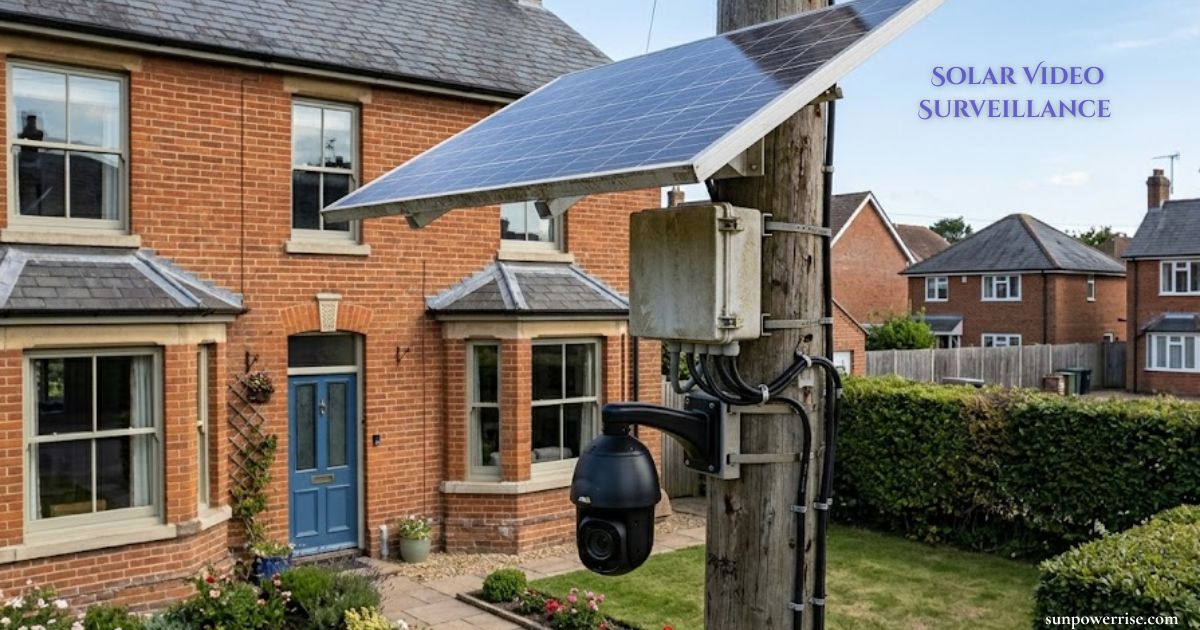
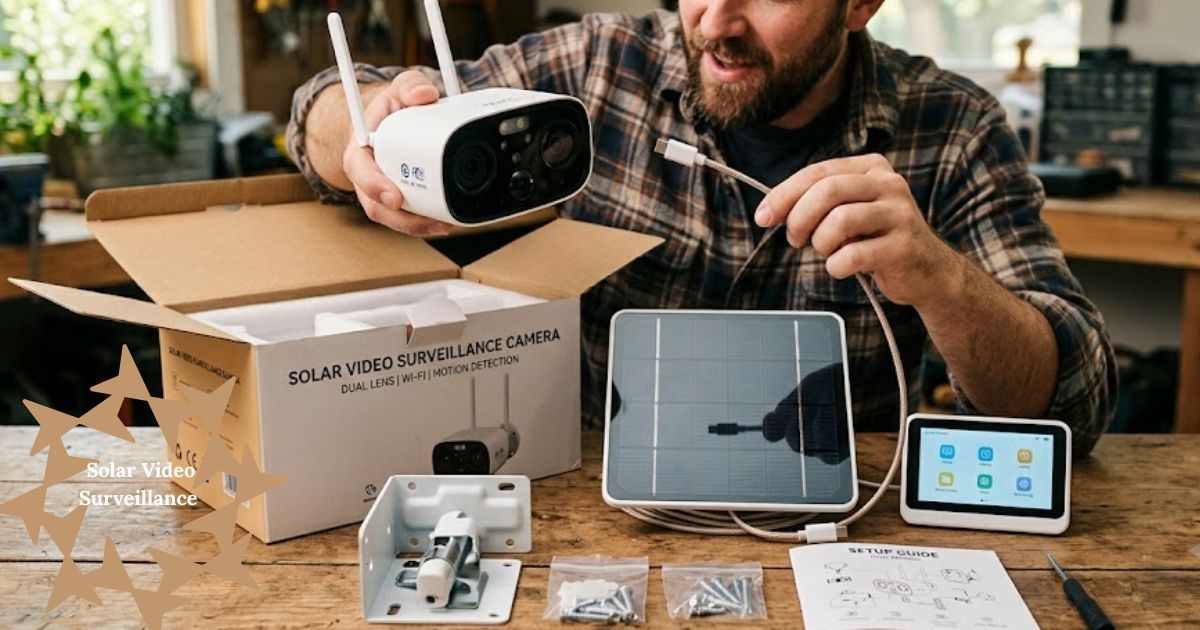
I remember the first time I unboxed an outdoor solar video surveillance camera, pulling out the unit with its two camera lenses, spotting the USBC charger at the end of the solar panel cable, and immediately thinking: this changes everything.
Inside the box, you get everything needed to get started: the screen, mounting hardware, and a clear setup guide. The moment I held it, I noticed how light it felt, which made me curious about where the battery was hiding.
Flipping the unit over, I found the slot for the SD card and the SIM card, because yes, this runs as a 4G camera module, meaning it talks directly to your phone over mobile networks, no router needed.
There is also a reset button tucked neatly into the body, which saved me more than once during initial setup.
Once you scan the QR code printed on the unit and hit add device inside the application, the camera connects quickly, just enter your password from the label, and you’re live.
What Is A Solar Video Surveillance Camera
A solar cellular security camera is a wireless camera that pulls its power from sunlight and pushes alerts and footage straight to your phone over a 4G or 5G connection, no broadband, no mains power, no compromises.
I have personally installed these at rural homes and farms where running traditional wiring was either too expensive or physically impossible, and the difference in peace of mind is immediate.
You get genuine, reliable monitoring without digging trenches, laying cables, or gambling on whether the Wi-Fi stretches to the far corner of your property.
How the Off-Grid Loop Works
The system works in a beautifully simple loop: the solar panel keeps the battery topped up during daylight hours, while the SIM card handles everything from live views to motion alerts over your chosen mobile network.
You store recordings either locally on a memory card or push them to the cloud, depending on what suits your setup.
Whether you sit two miles from your nearest neighbour or manage a busy job site, this kind of off-grid camera gives you full eyes on your property without depending on a router or a fixed mobile data connection.
Benefits of Solar Cellular Cameras over Traditional Security Systems
Total Power & Placement Freedom
The single biggest reason people choose a solar cellular system over any conventional setup is freedom from mains electricity, broadband bills, and the constant headache of battery swaps.
I have spoken with farm owners who spent thousands running power lines to outbuildings, only to discover a solar camera would have done the same job for a fraction of the cost.
These cameras run entirely on solar-charged batteries, making them the obvious choice for rural homes, farms, building sites, and even holiday lets where wiring a connection is either too costly or outright impossible.
Tool-Free Adaptability & Low Running Costs
Installation is genuinely fast and stress-free, no fixed internet connection to sort out, no drilling, no cabling, which means you can shift the camera to match your changing security needs without calling a contractor.
If your priorities change seasonally, say you need extra coverage during harvest on a farm, you simply move the unit temporarily to a new spot.
Once it is up and running, day-to-day running costs stay remarkably lean, usually just the mobile data plan, with the battery charged continuously by the sun at no extra cost.
Hands-Off Charging & Continuous Coverage
Standard battery-powered cameras demand regular manual charging, and the moment you forget, your coverage drops.
With solar support, the battery tops itself up automatically, so you are not climbing ladders or swapping power packs on cold mornings.
The combination of genuine off-grid capability, near-zero maintenance, and solid protection around the clock makes the running cost argument almost impossible to argue against; these cameras simply pay for themselves.
Solar Cellular vs Wi-Fi vs Battery Cameras
When I first started comparing solar cellular cameras against Wi-Fi cameras and battery-only cameras, the differences were sharper than I expected, especially for anyone needing coverage beyond the reach of a home network.
Solar video surveillance cameras run on 4G and 5G mobile networks, meaning they function perfectly without any broadband connection, while Wi-Fi cameras demand a stable home network, and battery-only cameras remain entirely Wi-Fi dependent.
For locations like farms, yards, remote cabins, and construction sites, that distinction is everything.
Unrestricted Placement & Weather-Resistant Power
On the power side, solar video surveillance cameras combine a solar panel with a rechargeable battery, giving them a serious edge in longevity over battery-only cameras that drain steadily and need swapping, especially when cold weather hits and battery performance drops.
Wi-Fi cameras typically rely on mains power or a separate rechargeable battery, which ties them firmly to the building.
The installation of a solar cellular unit requires no wiring at all, which makes flexible placement across large or awkward sites straightforward, something neither Wi-Fi nor battery-only cameras can fully match.
Controlled Indoor Strengths vs. Year-Round Outdoor Resilience
Where Wi-Fi cameras genuinely shine is in delivering a stable connection and fast alerts inside a home with good broadband; they are hard to beat in that controlled environment.
Battery-only cameras still earn their place for quick deploy situations, simple setup needs, or short-term rental properties with local recording requirements and minimal data usage.
During the UK winter, cloudy days solar video surveillance has slow charging on solar units, so sizing your solar panel and battery correctly matters, but a well-specked solar system with proper connectivity and smart PTZ coverage remains dependable throughout the year, regardless of the season or data dependency concerns.
How to Set Up a Solar Cellular Security Camera System
Site Assessment & Signal Testing
Setting up your first solar video surveillance system starts with choosing the right ideal location, walking the site, and thinking about which angles cover your priority zones: gates, doors, and driveways are always the priority.
Next, pull out your phone and walk to the exact installation point to test the mobile signal with your chosen network. You want at least 2-3 bars of steady coverage, and if it is patchy, try a different provider or nudge the camera position slightly before committing to drilling.
Digital Pairing & Smart Data Management
Download the manufacturer’s app, scan the camera’s QR code, and work through the on-screen prompts until the unit shows as paired with your phone.
Slide in your SIM, activate it inside the app, and start with conservative settings, short clips, and event recording only, then watch your real data plan usage over the first week before adjusting.
Hardware Mounting & Weatherproofing
Mount the solar panel on a south-facing surface, angled to catch the light throughout the day, and clear any shadows thrown by trees, buildings, or fences that could quietly starve your battery.
Fix the camera itself to a solid surface using proper screws and brackets at a height between 2.5 m and 3 m, visible enough to deter intruders but reachable for maintenance, angled to sweep across your key entry points.
Run the power cable from the panel to the camera, seat it firmly, and verify all weather seals are tight before routing the cable safely away from exposure to rain and long-term wear.
Security Tuning & Calibration Walk-Through
Solar video surveillance systems should be fully configured inside the app by pushing the latest firmware, setting the correct time zone, and activating two-factor authentication immediately.
Define your activity zones, enable people detection and vehicle detection, and configure exactly when you want alerts to reach you. Then, physically walk the field of view, confirm live feeds, motion alerts, and night vision all respond correctly.
Monitor battery levels, solar charging rate, signal strength, and alert accuracy daily for the first week, tweaking clip length, resolution, and sensitivity until the system performs exactly as you need it.
FAQs
What is solar video surveillance, and how does it work?
Solar video surveillance uses cameras powered by solar panels and rechargeable batteries to monitor properties without mains electricity. A SIM card handles the mobile data connection, sending live footage and motion alerts directly to your phone.
Can solar security cameras work without Wi-Fi?
Yes, solar cellular cameras connect over 4G or 5G mobile networks, making them completely independent of Wi-Fi or broadband. As long as your location has mobile signal coverage, the camera stays online and functional.
How long do solar security cameras last without sunlight?
A well-specked camera with a 9,000+ mAh battery can run for several days without direct sunlight, bridging cloudy or overcast periods comfortably. Efficient power management and refined motion zones extend the battery life even further during low-light stretches.
Are solar video surveillance cameras good for rural and remote locations?
Absolutely, rural farms, remote cabins, and off-grid construction sites are exactly where solar cellular cameras perform best. They require no wiring, no broadband, and no mains power, making them the most practical security solution for hard-to-reach locations.
What video resolution should I look for in a solar security camera?
2K resolution covers most everyday security needs clearly, but 4K is worth choosing if you need to identify faces, license plates, or fine details at greater distances. Keep in mind that higher resolution consumes more storage and mobile data.