

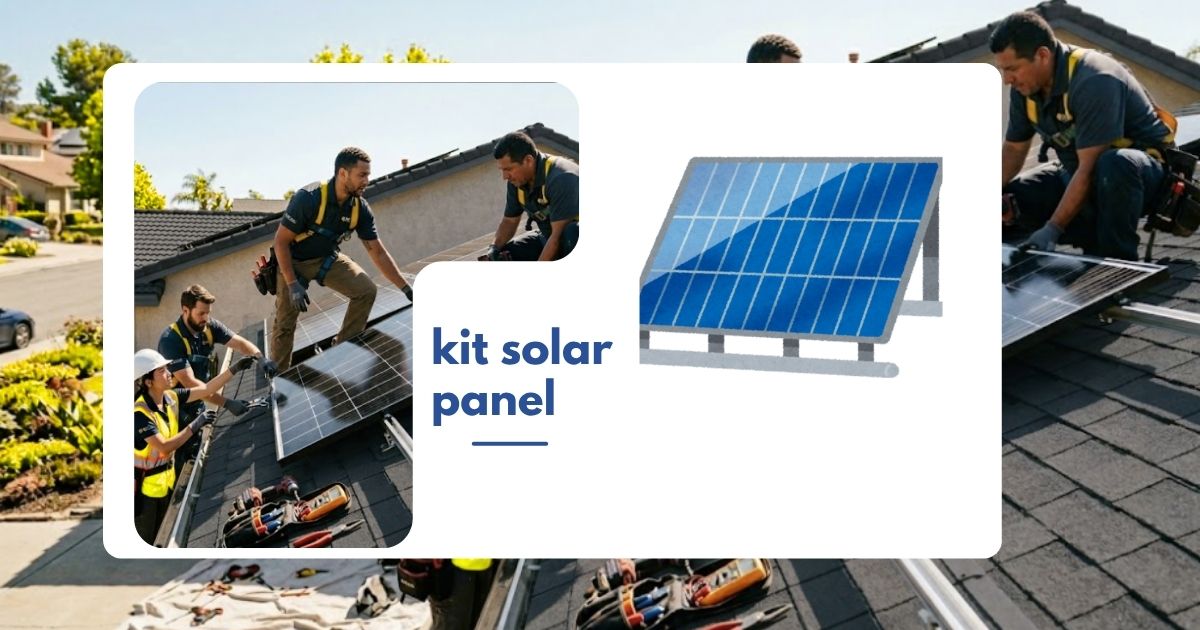
A kit solar panel is a pre-packaged bundle of everything you need to generate your own electricity from sunlight: the solar panels themselves, an inverter to convert the power into something your home or vehicle can actually use, mounting hardware, and the cabling and connectors to wire it all together.
Instead of sourcing each part separately and hoping they’re compatible, a kit is matched and tested to work as one system, so you can go from box to working power with far less guesswork.
Kits range from small 12V setups that trickle-charge a leisure battery in a campervan, right up to full home installations with several kilowatts of panels and battery storage. What you actually need and what you’ll pay depends heavily on how you plan to use it.
What’s Actually Inside a Kit Solar Panel
Most kits, regardless of size, are built from the same core components:
Solar panels
monocrystalline panels are the most common choice for UK roofs thanks to their higher efficiency in lower light; polycrystalline panels are cheaper but slightly less efficient in overcast conditions, which matters more here than in sunnier climates.
Inverter
It converts the DC electricity your panels produce into the AC electricity your home appliances use. Hybrid or AC-coupled inverters also manage battery charging in one unit.
Charge controller
It regulates the flow of power into the battery so it charges safely and lasts longer (most modern kits use MPPT controllers, which squeeze more usable power out of the same panels than older PWM controllers).
Battery storage increasingly lithium (LiFePO4), which lasts longer and handles deeper discharge cycles than the older AGM or lead-acid batteries still found in budget kits.
Mounting hardware and cabling brackets, rails, MC4 connectors, and the cable runs between components.
Not every kit includes every item on this list. Cheaper “panel-only” kits leave out storage and sometimes the inverter, so it’s worth checking the spec sheet line by line before comparing prices a £450 kit and a £1,400 kit aren’t always solving the same problem.
UK Rules You Can’t Skip
This is where a lot of guides fall short, and it’s the part that actually determines whether you can legally switch your kit on.
DNO notification
Any grid-connected solar installation in the UK kits included has to be notified to your local Distribution Network Operator before or shortly after installation. Systems up to roughly 3.68kW per phase (16A) generally go through a straightforward G98 notification.
Larger systems need the more involved G99 application, which requires DNO approval before you connect. Skipping this step isn’t just a paperwork issue; it can leave you without cover if something goes wrong.
Planning permission
For most homes in England, solar panels count as “permitted development” and don’t need planning permission. That changes if your property is listed, sits in a conservation area, or the panels would significantly alter the building’s appearance always worth a quick check with your local authority if any of those apply to you.
Certification
Look for MCS-certified components and installers if you want to qualify for any export payment schemes (like the Smart Export Guarantee), and for ENA-approved equipment as a baseline safety standard.
This matters more than people expect: uncertified kit bought cheaply on marketplaces can technically work while still failing the requirements that let you get paid for the power you export.
Installation
DIY-friendly kits still typically need a qualified electrician for the final connection into your consumer unit, particularly for anything grid-tied.
Plug-in “balcony solar” kits that connect via a standard wall socket occupy a legal grey area in the UK; some are sold, but full regulatory approval for socket-only connection isn’t yet settled, so treat these carefully rather than assuming they’re automatically compliant.
Home Bundles: Battery & Inverter
A solar panel and battery kit for the home combines PV panels, a battery, a charge controller, and a bidirectional inverter into one system either fully off-grid or grid-tied with storage.
The best of these balance three things against each other: storage capacity, conversion efficiency, and upfront cost, because pushing one up usually pushes the price up too.
Done well, a complete home kit with battery and inverter can cut your daytime grid draw close to zero and cover a good chunk of your standing load the background electricity your home uses even when nothing’s obviously switched on.
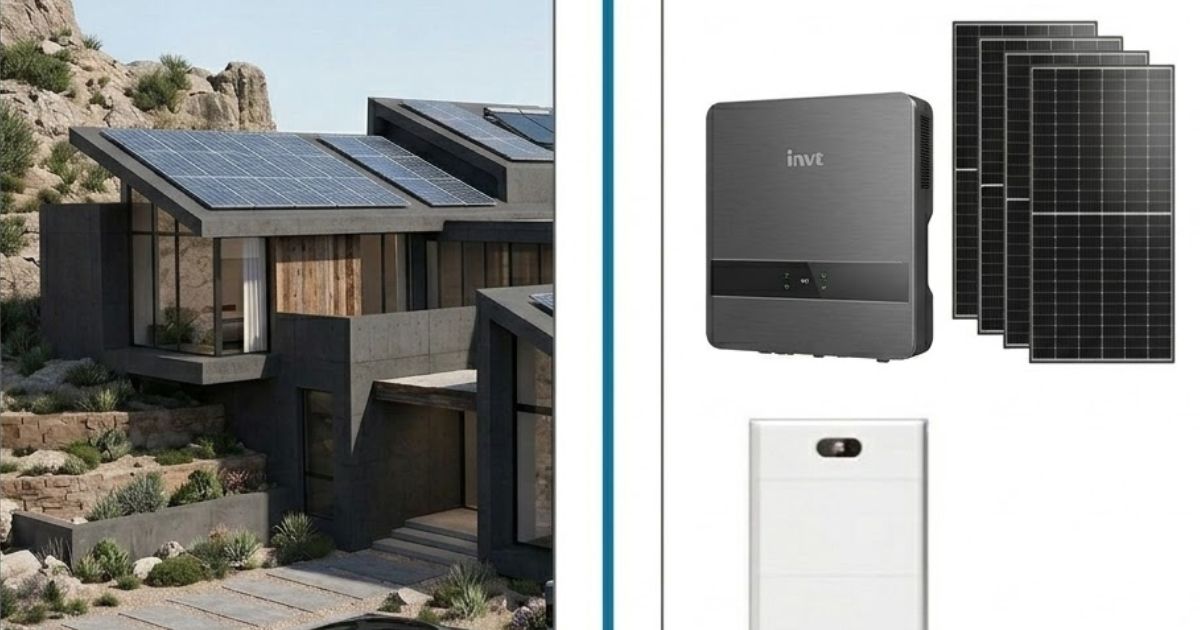
Compact all-in-one units like the EcoFlow Stream pack around 2kWh of storage with roughly 2kW of panels (commonly four 520W panels) into a single system, which suits smaller roofs or partial-offset setups better than a full MCS-installed array.
Pricing
Basic roof-install setups with mounting hardware start around £450; advanced all-in-one units with a micro-inverter, built-in charge controller, and bidirectional capability run up to roughly £1,400. Budget for the electrician’s fee and any G98 paperwork on top this is the cost most kit listings quietly leave out, and it can add several hundred pounds depending on your setup.
Campervan and Mobile Solar Kits
For vans, motorhomes, and other vehicles, flexible or portable panels are the more sensible choice they handle curved roofs, weigh less, and are easier to fit without structural changes than rigid glass panels.
Portable “suitcase” designs, popularised by brands like EcoFlow, fold flat for storage and are aimed squarely at motorhome, tiny-home, and camping use.
A 300W kit paired with two 150W-rated inverters is a common combination for covering standing load on an overcast day useful context if you’re trying to size a system around what your van actually draws rather than a headline wattage number.
A full campervan kit with battery storage, charge controller, MC4 connectors, and cabling gives you round-the-clock power for lights, devices, and small appliances without touching the grid at all.
What Output to Actually Expect in the UK
This is the number most kit listings avoid, and it’s the one that matters most once you own the thing: UK sun hours vary enormously by season, from as little as 1 hour a day in December to over 7 hours a day in June.
A panel rated at 350W won’t produce anywhere near its rated output through a British winter using a realistic average of around 4 sun-hours a day, a 350W panel produces roughly 1,400Wh on an average day, with far less in winter and more in summer. Size your system around your worst-case season, not the spec sheet’s best-case number, or you’ll end up disappointed by January.
FAQs
What is a kit solar panel and what does it include?
A solar panel kit bundles PV panels, an inverter, cables, and often a solar battery and mounting hardware for a complete plug-and-play setup.
How much does a kit solar panel cost?
A basic micro-inverter kit starts at around £99, while full EcoFlow systems with 2kWh battery storage and four 520W panels cost up to £1,400.
Can I install a kit solar panel myself?
Yes. Many DIY solar panel kits use simple MC4 connectors and plug-and-play assembly, though UK regulations require a qualified electrician for the final grid connection.
Will a solar panel kit work on cloudy days?
Yes, even on overcast days, two inverters can generate around 300 watts, covering most of your home’s phantom drain and standing load effectively.
Are solar panel kits worth the investment?
Absolutely a quality solar panel kit with battery storage can slash your energy bills, reduce grid draw to near zero on sunny days, and deliver strong long-term ROI.