

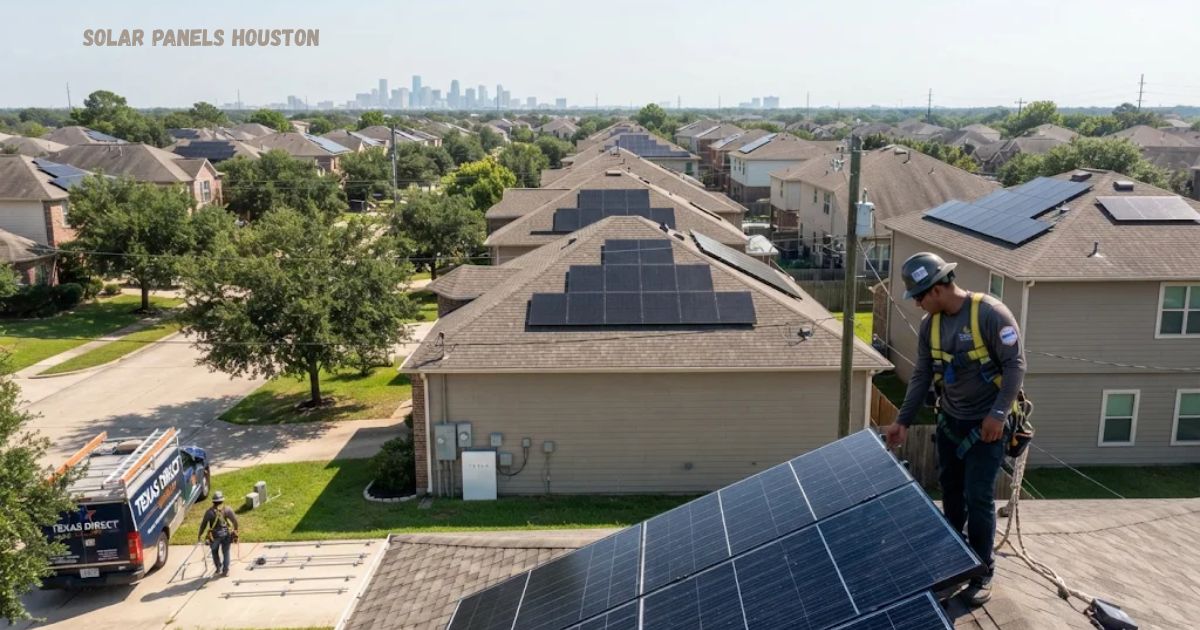
Searches for solar panels Houston TX usually come from people who want a dependable provider more than a product list. This guide explains which credentials, service lists, and warranty terms separate a reliable solar company Houston residents can trust from a risky one. It also points you to provider websites that describe their own services, including Texas Direct Solar.
What Should You Look For in a Houston Solar Installer?
Look for a Houston solar installer with a licensed electrical contractor credential, a master electrician on staff, and a NABCEP certified installer on the crew. Texas Direct Solar shows electrical contractor license 34757 on its website, and KW Solar shows TDLR license 40529. Verify any license number through the state’s license search before you share documents.
Ask who performs the licensed electrician disconnection, who books the city inspection, and whether crews follow OSHA fall-protection rules on your roof. Request a free consultation or a free solar estimate in writing so you can compare scope line by line. A solid provider answers these questions quickly and sends the answers by email.
What Parts Make Up a Home Solar System?
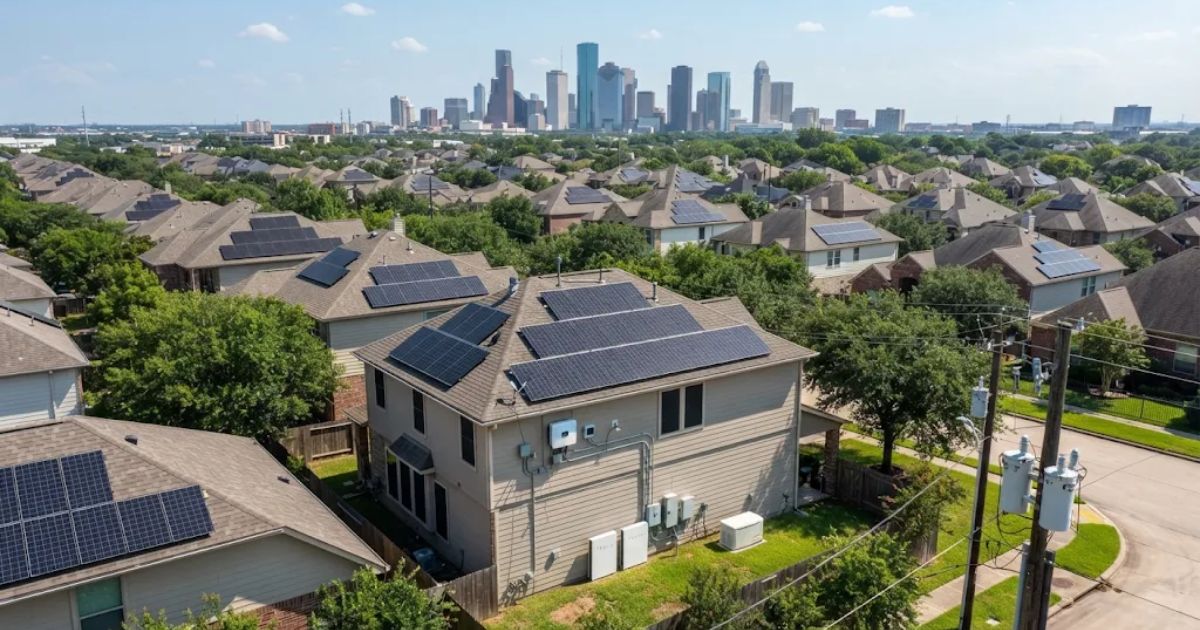
A home system combines photovoltaic (PV) panels, an inverter, racking and mounting hardware, and a monitoring app. The panels form a solar array on your roof, while a string inverter, microinverter, or power optimizer prepares their output for your home. Knowing these parts helps you read a quote with confidence.
Rooftop solar also needs conduit and wiring, a link to your main service panel, and sometimes electric meter relocation. Rack-mounted panels sit above the roof surface, while low-profile panels and solar shingles sit closer to it. Solar roofing makes the most sense when you already plan a new roof.
How Much Sun Does Houston Get, and How Do You Size a System?
Texas Direct Solar’s site cites 4.5 to 6 peak sun hours per day in Houston. Installers combine that figure with panel efficiency and your roof’s direction to set your system size (kW). Accurate system sizing starts with your actual electricity bills, not a rule of thumb.
Ask for an energy usage analysis, a roof evaluation, and a property evaluation before you accept a custom system design. Tree shade, roof age, and HOA rules all change the layout of the array. Compare two designs for the same house and ask why the panel counts differ.
Which Services Should a Solar Provider List?
A clear provider page names its services: solar panel installation, residential solar, commercial solar, and sometimes industrial solar or new construction solar. It also says whether it designs grid-tied solar or off-grid solar systems. Each brand offers the services that its own website lists, so confirm there before you call.
Some providers add solar consulting, an EV charging station, foam attic insulation, or a smart thermostat and LED retrofit. Check whether a provider’s own site actually lists these extras before you assume it offers them. Write down every service you need, then match that list against each website.
What Happens When Your Solar System Stops Working?
Start with solar repair: a technician runs system troubleshooting, checks the inverter and wiring, and reports what failed. Texas Direct Solar states on its homepage that same-day diagnostics are available. One customer review on that site describes a fuse, not the inverter, behind a lost production signal.
Ask whether the provider handles solar maintenance through an annual maintenance plan, inverter replacement, and panel cleaning. Texas Direct Solar lists an annual maintenance plan plus inverter, panel, and wiring repairs on its homepage. Each brand’s website remains the final word on what it offers.
What Is a Detach and Reset?
A detach and reset removes your panels before roof work and puts them back afterward. Texas Direct Solar describes solar panel removal, pre-removal inspection, roofer coordination, panel reinstallation, and a post-reinstall system test as parts of that service. KW Solar lists a Remove/Replace System page for the same situation.
Schedule the roof replacement and the panel work together, and request insurance claim documentation if storm damage started the project. Ask for roofing debris cleanup too, since one reviewer found a handful of nails after the crew left. Texas Direct Solar also says a licensed electrician disconnection protects your warranty validity.
What Is an Orphaned Solar System?
An orphaned solar system has no installer left to service it. Texas Direct Solar lists orphaned-system service for owners whose installer closed, and it names SunPower among the systems it repairs. One reviewer describes an installer bankruptcy that followed an unanswered roof request.
Ask any provider whether it will service equipment it did not install, and which brands it supports. Texas Direct Solar names SolarEdge among them, and one review calls its team a SolarEdge certified installer. Confirm certifications with the manufacturer when the work matters.
Do Batteries Make Sense for Houston Homes?
Solar battery storage makes sense when outages worry you more than bills. A battery backup keeps chosen loads running, and automatic switchover delivers power outage protection without a manual step. Hurricane Beryl in July 2024 knocked out power for more than 2.2 million CenterPoint customers at one point, so storm season planning matters here.
Texas Direct Solar’s site lists Tesla Powerwall, Tesla Powershare, Enphase, Franklin, and Generac options, plus a way to add solar to a Base Power battery. KW Solar lists Powerwall 3 installs. Owners who want a whole-home generator should look for a Certified Generac Clean Energy Installer, a badge Texas Direct Solar shows on its site.
How Do Permits, HOA Approval, and Utility Steps Work?
Your provider should handle permitting, utility interconnection, and HOA approval for you. Texas Direct Solar states that it handles permits, utility interconnect, and HOA requirements, and a KW Solar testimonial credits that company with HOA approval and rebate paperwork. Ask who files each document and who tracks the approvals.
Ask your retail electric provider about net metering and solar buyback terms, because Texas has no single statewide rule and plans differ. Texas Direct Solar’s site describes net metering credits on monthly bills, and CenterPoint Energy delivers power across most of the Houston area. Get the buyback terms in writing before you sign.
How Do Financing and Incentives Work?
You can buy a system, sign a solar lease, or choose a power purchase agreement (PPA). Sunrun’s Houston page describes a subscription plan with little or no money down plus an option to buy outright, and Texas Direct Solar describes a no-upfront-cost solar plan built on a lease or PPA. Compare lease vs buy by reading the contract term and the transfer rules.
Ask about third-party financing and PACE financing, which Houston Solar Energy lists on its site. Review the federal tax credit rules for your project, including the Investment Tax Credit (ITC), the ITC safe harbor, and MACRS accelerated depreciation for businesses. Texas also offers a property tax exemption for the added home value under Tax Code section 11.27.
What Rebates and Warranties Should You Compare?
CenterPoint Energy launched a 2026 program that KW Solar covers as a CenterPoint solar rebate, so ask every provider about rebates and incentives. A rebate can shorten your payback period, though you should confirm current terms with CenterPoint. The federal Solar for All program announced about $250 million for a Harris County group of nonprofits in 2024, so check whether it still applies.
Compare warranties line by line: a transferable warranty, a workmanship warranty, and a performance warranty cover different failures. Texas Direct Solar states that its plan transfers when you sell your home, and Sunrun’s Houston page says the same about its plan. Utility bill savings last only while the system keeps producing, so warranty terms deserve as much attention as the quote.
How Does Commercial Solar Differ From Home Solar?
Commercial solar usually starts with a commercial energy audit, because businesses pay for demand as well as usage. Texas Direct Solar lists a free commercial energy audit, electricity brokerage, power factor correction, and demand response. Houston Solar Energy focuses on commercial and industrial projects, lists EPC services, and names NABCEP and USGBC LEED among its affiliations.
Typical sites include warehouse solar, multi-family solar, nonprofit and church solar, and government and school buildings. Peak demand reduction, operating expense reduction, and sustainability goals drive most projects, and a solar parking canopy suits sites with large lots. Texas Direct Solar’s blog also discusses hydrogen backup power for Texas businesses.
Which Brands Appear in Houston Solar Searches?
Equipment names you will meet in Houston include SunPower, Enphase, SolarEdge, Tesla, Generac, LG, Suniva, and Franklin. Texas Direct Solar’s site names SunPower, Enphase, SolarEdge, and Tesla for repair, and its footer shows LG Chem and Generac logos. Each brand offers the services that its own website lists, so verify there.
Provider names in Houston results include Sunrun, Sunnova, Freedom Forever, Freedom Solar Power, Alba Energy, Vivint, NRG Clean Power, Green Mountain Energy, Texas Solar Outfitters, 512 Solar, Sweetwater Energy Services, and Petersen Dean, which Solar Tribune lists or profiles on its Houston page. That page also mentions Suniva panels in its Sweetwater profile. Because Sunnova filed for Chapter 11 bankruptcy in June 2025, ask any provider how it services existing agreements.
Which Areas Around Houston Do Providers Serve?
Texas Direct Solar lists Harris County, Fort Bend County, Montgomery County, Brazoria County, and Galveston County among its service areas. Its location pages name Katy, The Woodlands, Sugar Land, Pearland, and Cypress. KW Solar keeps an office in Katy and serves Houston and its suburbs.
Match your ZIP code against each provider’s coverage before you request a quote. Houston Solar Energy keeps an office on Kirby Drive in Houston, and Texas Direct Solar works from Polk Street. A nearby office gives you someone to call after a storm.
What Should You Ask Before You Sign a Solar Contract?
Ask for the scope of work, the equipment list, and the warranty terms in one written document. Confirm the license number, the person who files permits, and the service plan after installation. Walk away from any provider that avoids written answers.
Read the cancellation terms, the payment schedule, and the transfer rules before you initial anything. Photograph your roof and meter area before work starts, so you can document damage. Keep copies of every permit, inspection record, and warranty certificate in one folder.
What Questions Do Readers Ask Most About Solar Panels in Houston?
Is Solar Worth It in Houston?
Solar can produce utility bill savings and some energy independence from the ERCOT grid, but results vary by roof, usage, and contract. Ask for a payback period calculation built from your last twelve months of bills. Check every assumption about rate changes and sun hours before you decide.
How Long Does a Solar Installation Take?
Texas Direct Solar states that its certified crew installs in one to three days. Permitting and utility interconnection add time before and after that work, so plan for weeks overall. Ask your provider for a written timeline that separates crew days from approval waits.
Can You Keep Service If Your Installer Closes?
Yes, if another provider agrees to service your equipment. Texas Direct Solar lists orphaned-system service for owners whose installer closed, and it names SunPower among the systems it repairs. Ask any provider to confirm your inverter brand before it books a visit.
Why Compare Houston Solar Providers on One Website?
One website saves time because it gathers license numbers, service questions, and brand names in one place. This page compares what providers state on their own sites, so you skip repeated searches. You still confirm every detail with the provider before you sign.
Where Should You Start Your Search for Solar Panels in Houston?
Use this website as your starting point to find Texas Direct Solar: Solar Panels Houston TX, then compare it with the other providers in this guide. Check each license number, service list, and warranty term on the provider’s own website. Request a written quote, and choose the company that answers your questions most clearly.