

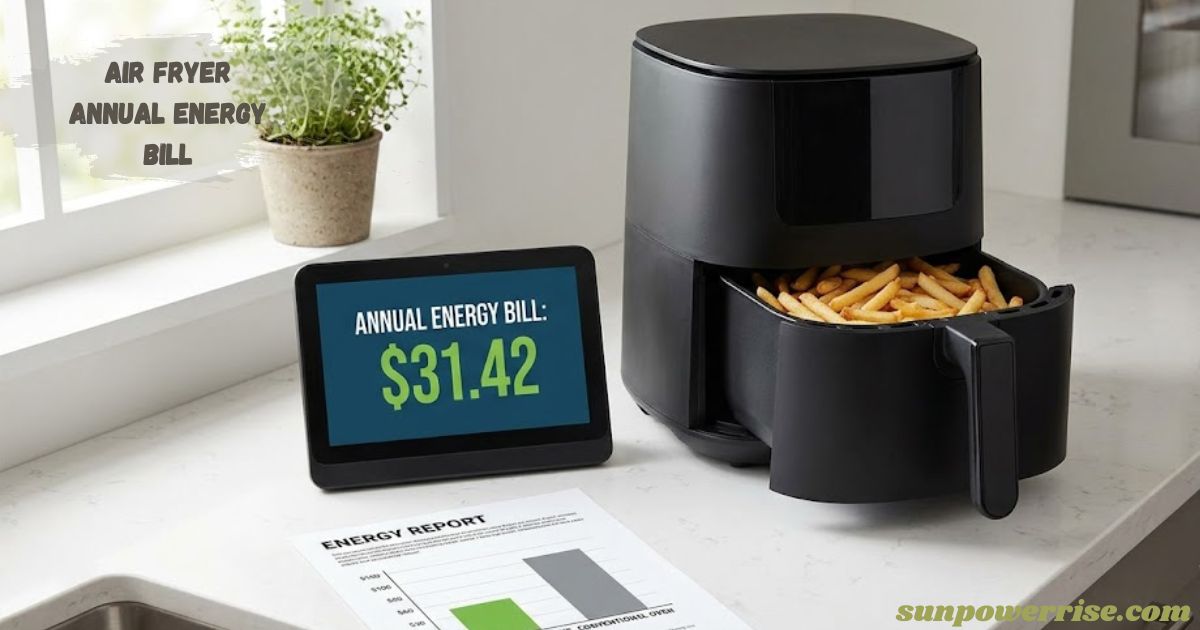
In the air fryer vs oven contest, your air fryer annual energy bill stays lower because that appliance is cheaper to run. A basket air fryer pulls about 1,500 watts, while a fan oven pulls 2,000 or more. A short preheat (2–3 minutes) and cooking time decide it.
I tested both last winter, using a conventional oven and an air fryer oven. The electric oven, gas oven, and convection oven all cost more for small jobs. That makes the air fryer more economical and energy efficient.
How do I calculate the running cost of each appliance?
Use the kWh formula (watts × hours ÷ 1,000) to turn wattage into kilowatt-hour (kWh) usage. The watts to kilowatts conversion comes first, then you multiply by your electricity unit rate. That gives the cost per use and cost per hour.
Read the power rating and peak wattage on the rating label on the appliance or in the product manual. Your bill lists pence per kWh and a daily standing charge, and the Ofgem price cap limits both on default tariffs, while a direct debit rate may differ. Try one step-by-step calculation: 1,500 W for 30 minutes uses 0.75 kWh, so at an average electricity rate of 25p the cost per 30 minutes is about 19p.
How much does an air fryer add to my annual energy bill?
At two weekly usage hours, the air fryer annual running cost lands near £39 for a 1,500 W model at 25p per kWh. That equals roughly £3.25 in monthly electricity cost. The annual energy bill barely moves.
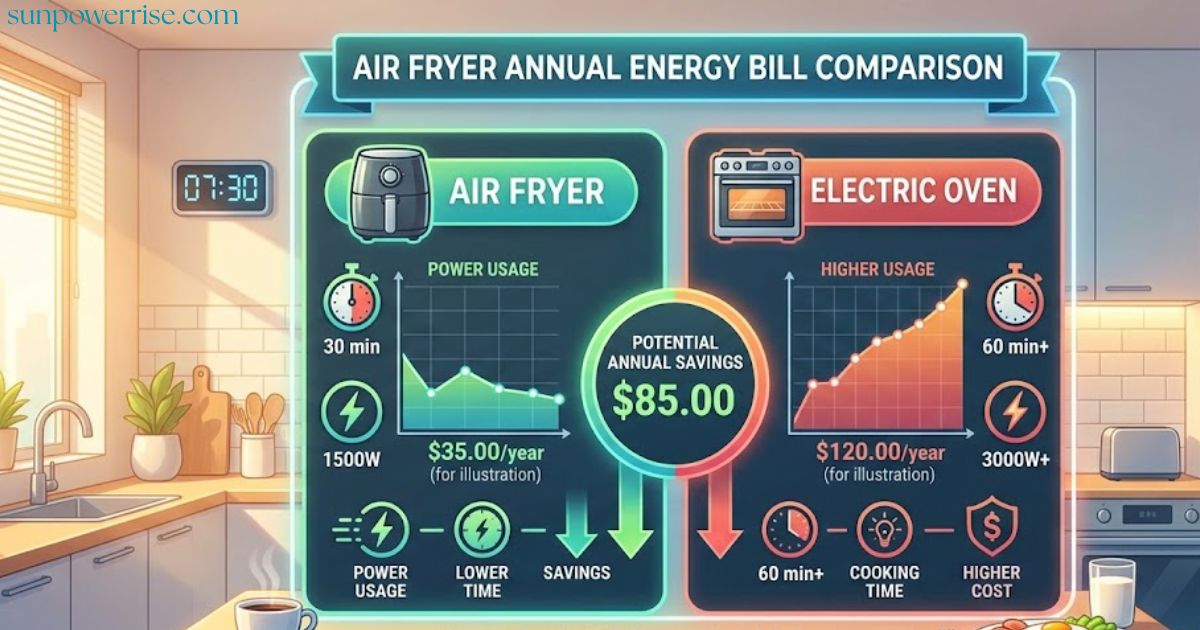
A 2,400 W oven used for the same two hours costs about £62, so annual savings reach £23. An £80 purchase reaches its break-even point after about 3.5 years, so the payback period and return on investment stay modest. Your energy supplier’s Economy 7 off-peak rate shifts peak and off-peak hours and changes household energy bills.
When does a full-size oven still make sense?
A full-size oven suits large meals because its oven capacity in litres runs 60–70, against under 10 for most air fryers. The oven cavity and cooking chamber size let you roast a whole chicken for a Sunday roast. An air fryer suits a single portion or small portions.
Batch cooking in multiple batches erases that advantage, and preheating time or heat-up time adds cost. A toaster oven, halogen oven, microwave, or deep fryer fills some gaps. A dual-zone air fryer or multi-cooker covers a roast dinner better.
What features make an appliance energy efficient?
Rapid air circulation and hot air circulation cook food faster, and super convection pushes that further. A heating element and built-in fan work together, while a smart thermostat and intelligent temperature control hold steady heat. Insulation quality and double-wall construction keep heat retention high and heat loss low.
Tight door seals, a viewing window, auto shut-off, keep-warm mode, and a preheat indicator trim waste. Newer models add smart load detection and app connectivity. Check the energy efficiency label and efficiency score, and watch for mandatory energy labelling for small appliances.
Which foods and habits change the running cost?
Food type, food quantity, cooking temperature, and cooking duration each move the figure, as do appliance size and capacity, wattage level, and frequency of use. Frozen food, frozen chips, and high water content foods need longer, while dense foods like a whole chicken need more. Chicken breast, a jacket potato, and roasted vegetables cook well, and reheating leftovers or quick-cooking foods saves the most.
The Maillard reaction needs heat, so energy-saving tips matter. Avoid overcrowding the basket, use single-layer food arrangement, and keep adequate ventilation. Clean the basket regularly to stop grease buildup and food debris, and pick a lower temperature, longer cooking time when the recipe allows.
Match the appliance to the task, and buy a right-sized air fryer. Plan your recipes, use residual heat, unplug when not in use, and check temperature calibration with an oven thermometer or internal temperature probe. Cooking accessories (baking paper, foil) must not block airflow.
How can I measure my real electricity usage?
A power meter or smart meter shows power consumption and electricity usage per session. An energy monitoring app turns usage data into an energy cost calculation, and it records energy consumption per cooking cycle. Measure standby power draw and phantom energy use too, and reduce energy consumption.
What safety and environmental issues should I know about?
Overheating, blocked vents, restricted airflow, and uneven cooking often follow overloading the basket. Check inverter capacity / power surge limits before running a unit on backup power. Your carbon footprint and cooking-related emissions fall with renewable energy and solar power, and rise with fossil fuels.
What should I look for in a service provider?
Ninja Foodi, Tower Vortx, Cosori, Instant Vortex, Tefal ActiFry, and Cuisinart sell the units, while Midea lists a Support Request page, Service Locator, and Product Registration on its site. Fuse Energy states a free upgrade from a non-smart meter and app-based usage data, and The Eco Experts offers free solar panel quotes.
SolarTech lists Solar Care Plans and a System Health Check, EcoFlow lists a Warranty Policy and Support Center for its EcoFlow DELTA portable power station, and Endesa lists maintenance plans. Each brand offers the services listed on its own website. My site collects these options in one place, so you compare faster.
Why Air Fryers Beat Electric Ovens
There’s a gas oven cheaper angle to consider, but for most homes an air fryer beats an electric oven for three main reasons: it needs less electricity usage, it runs at a slightly lower temperature, and it manages faster cooking times.
The heat convection technology inside works through smaller compartments, so food gets cooked quicker and overall cooking times overall, letting you reduce temperatures by 10-20°C and reduce cooking times when following recipes.
To maximise savings and enjoy better-cooked food, only preheat when the recipe truly needs it; some meals skip that step in 10-15 minutes, and smaller fish fingers or chips don’t need it at all. I always cook entire meals together, mixing different temperatures carefully, and I pay attention to circulation so the hot air circulates freely and helps me cook efficiently.
Simple Tips To Cut Energy Use
Cutting bills further just takes a few smart habits, and each one chips away at your air fryer annual energy bill over time. Start by choosing energy-efficient appliances; swapping a G-rated model for an A-rated one can save hundreds over its lifetime. Run washing machines and dishwashers only with full loads, switch to eco modes, and switch off at the plug instead of leaving gadgets on standby; even kettles work better when you boil only the water needed.
For cooking, reach for the microwave or air fryer to handle smaller meals rather than heating the whole oven, and this alone helps maximise efficiency in the kitchen. Swap old bulbs for LED bulbs, since they use 80% less energy, and keep your fridge between 3-5°C and freezers at -18°C for optimal efficiency.
On the tech side, laptops use 85% less power than desktop PCs, and tablets cost as little as £2 a year to run, while smaller TV screens sip far less power than large ones. In colder months, electric blankets give personal warmth without heating full rooms, and it’s smarter to skip portable heaters and fans whenever you can batch cook instead of running the oven twice.
FAQs
Does an air fryer use less electricity than an oven?
Yes, for small portions. It heats faster and cooks quicker. Large roasts reverse that.
Is a smart meter worth it?
Yes, because it shows hourly usage. You spot costly habits quickly. Fuse Energy states it upgrades non-smart meters free.
How much does it cost to run an air fryer for 1 hour?
A typical 1,500W air fryer costs around 51p per hour, well below the 85p per hour an electric oven charges.
What is the downside of air fryers?
Its small capacity makes it a poor fit for cooking multiple dishes or feeding a large group of people in one go a real drawback if you’re used to a full Sunday roast.