

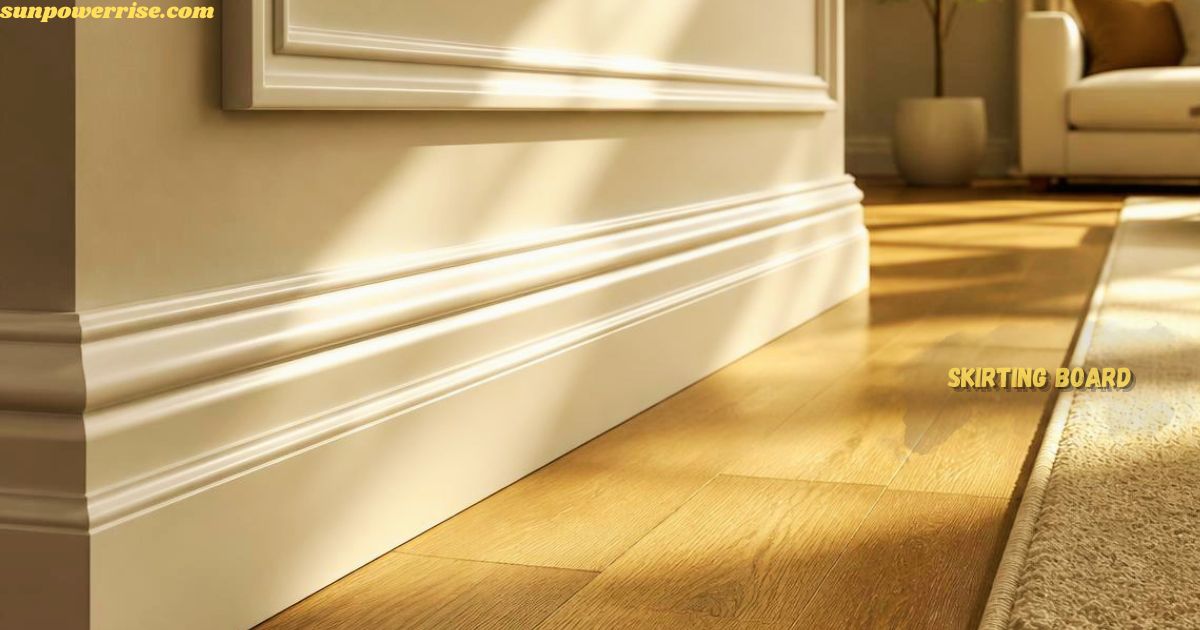
I’ve spent enough weekends covered in sawdust to know that skirting boards are one of those small details that quietly make or break a room.
Here’s everything I’ve picked up along the way, from choosing a style to getting a corner to sit just right, whether you call it a skirting board, a board skirt, or simply the trim running along your floor.
Skirting Board
Choosing a skirting board for your home can feel like a big decision, especially with so many different designs on the market today. A good starting point is to take inspiration from your own home rather than just chasing trends, and honestly, it comes down to personal preference since you’re the one living with it every day.
Every design you shortlist should feel like it belongs in your space, not someone else’s, and once you settle on the right skirting board skirting style, the rest of the room tends to fall into place around it.
Once you’ve picked from the designs on offer, the next job is installing them properly, and it’s really just a project you can tackle in a few simple steps.
My friend talked me through how to install skirting the right way, and it turns out even an awkward space doesn’t have to be a problem. Getting a corner, especially an external corner, cut and fitted cleanly is what separates a tidy finish from a messy one.
Decorative vs. Plain Skirting Boards
Every home carries its own home styles, and working out where yours sits is a great way to pick the right one. If your house leans towards traditional homes, full of ceiling roses, coving, picture rails, and detailed doors, a decorative skirting board usually becomes the natural feature that completes the aesthetic.
Homes built around a certain time period, like the Victorian era, tend to suit Victorian style skirting, adding real character and detail to the room, especially when a large design brings extra detailing into view.
A modern home, on the other hand, usually calls for something with no design or just a small design, since the layout stays clean and open. In this kind of interior, the rooms aren’t meant to have a focal point on the skirting, so a plain skirting board with a shorter board length can work beautifully.
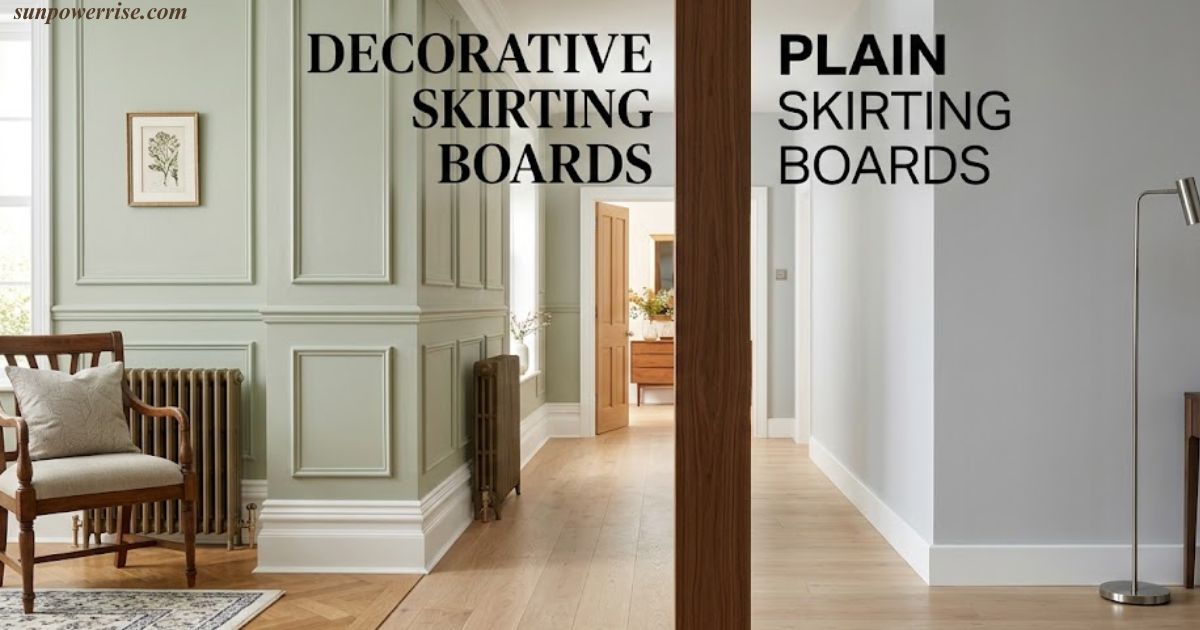
This styling choice also suits minimalist homes, where a bright, airy, and spacious feel matters more than heavy design styling.
If bold, busy rooms are more your thing, maximalist homes thrive on bold colours and a strong maximalist feel, so a more intricate, decorative one suits the space far better than a plain one.
Choosing skirting always comes down to personal preference, and your priority might be costs, maintenance, or simply matching your natural colour palettes. Whatever design direction you take, remember that traditional and modern looks each bring their own kind of simple charm to a room.
How to Install Them (Step-by-Step)
Before you touch a single board, measure the length of each wall in the room carefully, since a wrong measurement wastes both time and material. If carpet is going down, leave a 10mm gap for the carpet thickness, and mark your edge with clear marked lines.
For square skirting, internal corners can just butt together without any mitre cuts, but other profiles may need a scribe or a mitre for a proper fit. Take extra care at each corner to keep the whole finish looking tidy.
Grab your mitre saw and cut along the lines, keeping your fingers well clear of the blade at all times. Check each of your pieces against the wall before fixing anything, making small adjustments so everything follows the floor’s contour.
Find your wall studs with a stud finder, set the board in place, and secure it. Make sure to glue any mitre joints, then finish up with a nail gun or a line of silicone.
Once every board is secure, fill gaps and nail holes with filler for a seamless, cleaner finish. This last stretch is where most skirting boards really start to look professionally done.
Finish by painting with a small brush, protecting your floor with painter’s tape or a drop cloth, and don’t skip a spirit level check near the bottom of it.
How to Fit External Mitred Corners
Fitting an external corner starts with a witness mark, so you don’t lose track of which piece matches which. Most walls aren’t exactly 90 degrees, so use a sliding bevel to take a rough measurement of the true angle at that corner.
To get a perfect mitre, draw a straight edge line on the back of the board, add a parallel line, then bisect the angle between them. Set your sliding bevel to that reading and head to the chop saw or saw to cut the piece accurately.
Rather than screw the mitres straight onto the wall, glue the joint first using a two-part superglue with an activator, holding it for 20 seconds before you fix it in place. Once it’s screwed to the walls, fill any small discrepancies or gaps with decorator’s caulk for a clean, finished result.
Maintenance & Painting Considerations
Keeping skirting clean is a real factor to weigh up before buying. Decorative designs look lovely, but their intricate detailing gives dust more places to accumulate, making cleaning harder to stay on top of. If you want a low-maintenance option, a plain board is much easier to wipe down and remove marks from with minimal effort.
Painting matters too, since a flat surface gives a quicker, professional-looking finish than a design full of grooves and edges. Choosing gloss paint can mean glossing more often, because the finish tends to turn yellow over time and needs a fresh coat.
That’s part of why people end up painting or painting more often on decorative boards compared with plain ones. It’s also worth noting that skirting board covers are available for anyone who wants a fresh look without ripping out the old trim entirely, which can save time and mess.
FAQs
Where can I buy cheap skirting boards?
You’ll find affordable skirting boards at builders’ merchants, DIY stores, and online timber suppliers, with plain styles usually costing less than decorative designs.
What is the latest trend in skirting boards?
The current trend leans towards minimalist homes favouring simple, plain skirting board profiles, while maximalist interiors are bringing back bold, intricate Victorian-style skirting for extra character.
How much does a joiner charge to fit skirting?
Prices vary by length, profiles, and room size, but most joiners charge per metre or per room, so it’s worth getting a few quotes before you install.
Can I fit skirting boards myself without a joiner?
Yes, with a mitre saw, stud finder, and a bit of patience, most people can install skirting boards themselves following simple steps.
How do I clean decorative skirting boards without damaging them?
Use a soft brush or vacuum attachment to remove dust from intricate detailing, since decorative designs can be harder to clean than plain skirting styles.